Memory Zone.
A Path Through Chornobyl
MEMORY ZONE.A PATH THROUGH CHORNOBYL
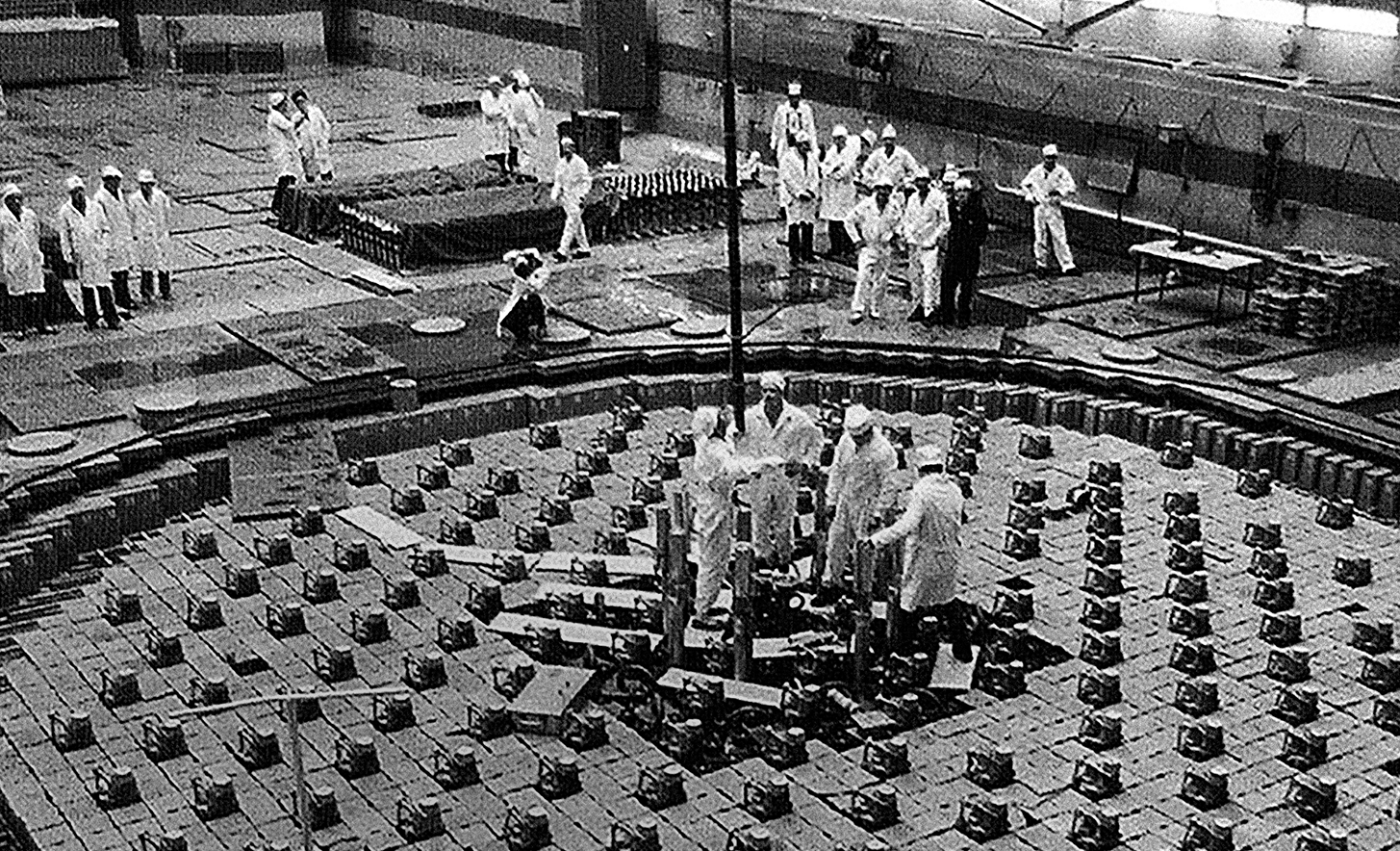
In 2026, it will be 40 years since the Chornobyl disaster — an event that changed the course of history, the lives of hundreds of thousands of people, and humanity’s attitude toward technology, safety, and responsibility.
This quest offers an opportunity to retrace, step by step, the events that became symbols of the tragedy and to understand how human decisions shape the future. Through interactive tasks, facts, and stories, you will immerse yourself in the reality of Chornobyl — from the moment of the accident to its consequences and the challenges of today.
Dedicated to the 40th anniversary of the tragedy, this quest aims to preserve memory, honor the heroism of the liquidators, and remind us that Chornobyl is not only a story of the past, but also an important lesson in responsibility for each of us.
Chornobyl Nuclear Power Plant: Construction and Operation
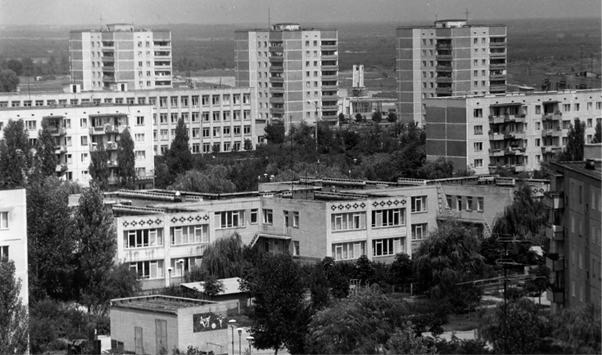
To support the operation of the Chornobyl Nuclear Power Plant, a satellite city was built. According to the social profile of the city of Pripyat as of January 1, 1986, its population was 49,400 people, including 15,406 children — among them 7,176 schoolchildren and 8,230 preschoolers — as well as 2,980 pensioners.
QUESTION:
Which city was built specifically for the workers of the Chornobyl Nuclear Power Plant?
CORRECT ANSWER
Pripyat — a city whose construction began simultaneously with the construction of the Chornobyl Nuclear Power Plant to accommodate its workers and their families. The Chornobyl NPP, located on the right bank of the Pripyat River, lies approximately 12 km from the city of Chornobyl and about 110 km from Kyiv. Between 1970 and 1983, four power units were commissioned here, each consisting of a nuclear reactor and two steam turbines, with plans for the construction of two additional units. The plant was intended to supply electricity to a vast region covering dozens of regions and millions of people, which made the creation of the modern satellite city of Pripyat an essential element in the functioning of this large-scale energy complex.
Unit Control Room
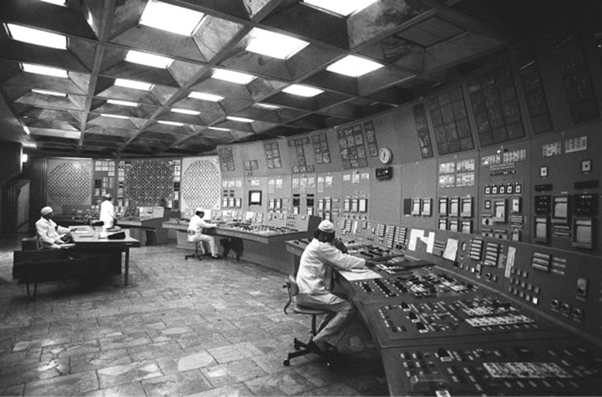
The operation of a nuclear power unit was controlled from a dispatch station known as the Unit Control Room (UCR) — the main control post designed for the real-time management of the power unit in all modes of operation (start-up, full-power operation, shutdown, and emergency conditions).
QUESTION:
Which button did the operators press on the Unit Control Room panel immediately before the reactor explosion?
CORRECT ANSWER
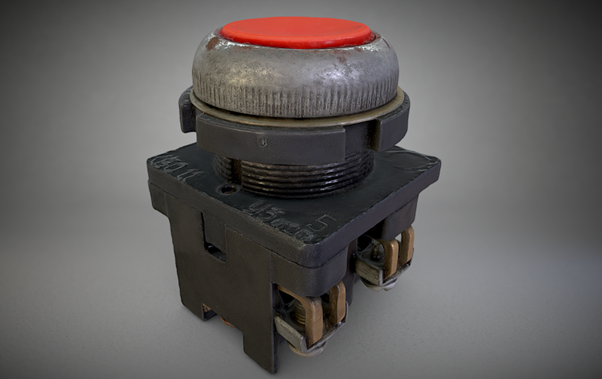
The emergency protection button — KE 011 AZ. It was this AZ-5 (emergency protection) button that Senior Reactor Control Engineer Leonid Toptunov pressed at 01:23:40 to shut down the reactor; within seconds, the reactor exploded.
The Unit Control Room of Reactor No. 4 is one of the most significant locations at the Chornobyl Nuclear Power Plant. It was here that operators controlled the reactor’s operation. The room housed the control panels for both the reactor and the turbine, and the equipment was monitored by the Senior Reactor Control Engineer, the shift supervisor, and other operators. Using levers and instruments, they controlled each reactor channel, the insertion level of control rods, and other parameters of the power unit’s operation.
The Chornobyl Disaster
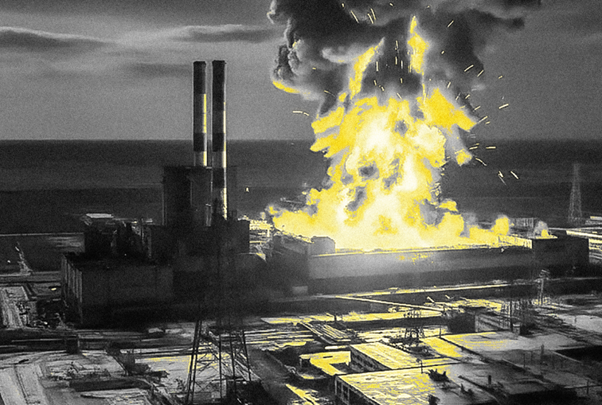
After the button was pressed, two powerful thermal explosions occurred at the fourth power unit of the Chornobyl Nuclear Power Plant, completely destroying the reactor. The building of the power unit partially collapsed, and a fire broke out on the roof.
QUESTION:
The largest man-made disaster of the 20th century, which shook the entire world, occurred in Ukraine on the night of…?
CORRECT ANSWER
The Chornobyl disaster occurred on the night of April 26, 1986, at the fourth power unit of the Chornobyl Nuclear Power Plant. During a safety test, a sudden surge in reactor power led to an explosion and a massive release of radioactive substances into the environment. This event became the largest man-made disaster in the history of nuclear energy, with consequences that affected not only Ukraine but also a significant part of Europe.
Liquidation of the Consequences of the Accident
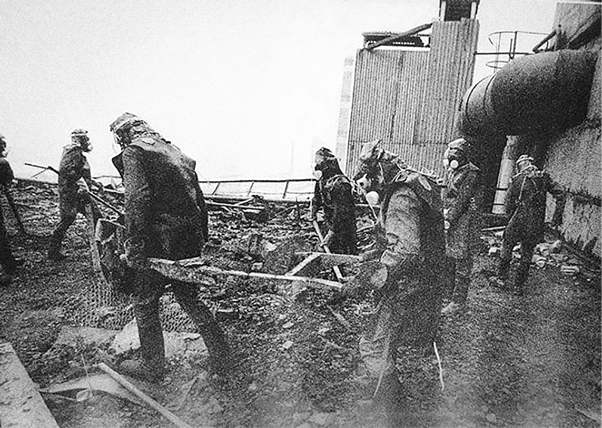
Within a few hours after the destruction of Unit 4, many immediate consequences were brought under control. Immediately following the accident, Unit 3 — located in the same building as Unit 4 — was shut down first, followed by Units 1 and 2.
QUESTION:
Who were the first to arrive at the site of the accident at the Chornobyl Nuclear Power Plant on the night of the explosion?
CORRECT ANSWER
Firefighters, as they were the first to arrive at the Chornobyl Nuclear Power Plant on the night of April 26, 1986, immediately after the explosion of Unit 4. At that moment, the reactor had turned into an open source of intense radioactive radiation: hundreds of millions of curies of radionuclides — isotopes of uranium, plutonium, iodine, cesium, and strontium — were released into the atmosphere. The scale of contamination can be compared to the radioactivity of hundreds of atomic bombs similar to those dropped on Hiroshima and Nagasaki. Without adequate protection from radiation, the firefighters extinguished the fires on the roof, effectively saving the plant from an even greater catastrophe. Their actions became the first step in the large-scale response to the disaster, which later involved around 600,000 people.
Covering Up the Truth
Despite the fact that the evacuation of residents from Pripyat and nearby villages began on the afternoon of April 27, the Soviet government — and, accordingly, the “most truthful” media in the world — remained silent about what had happened.
QUESTION:
Which mass event was not canceled in Kyiv after the Chornobyl Nuclear Power Plant accident?
CORRECT ANSWER
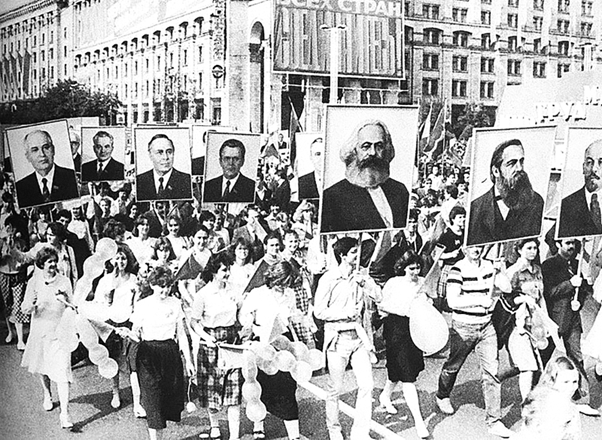
The May Day parade, which was not canceled in Kyiv even after the Chornobyl Nuclear Power Plant accident. International Workers’ Day was one of the key ideological holidays in the Soviet Union, so the authorities could not allow it to be canceled. Despite the fact that the radioactive cloud was already moving toward Kyiv, the Soviet leadership ordered the mass parade to proceed in order to create the impression of complete control over the situation.
On May 1, 1986, tens of thousands of people gathered on Khreshchatyk — according to official data, more than 120,000 residents of Kyiv and visitors to the city. People took part in the celebrations without being aware of the real danger of radiation. Later, these images of smiling demonstrators became a symbol not of control but of a cover-up of the truth and of the authorities' dangerous irresponsibility. Within just a few days, cases of radiation exposure began to be recorded on a large scale in Ukraine: by the morning of May 3, more than 900 people had been hospitalized, and the following day, over 1,300, including hundreds of children.
Evacuation
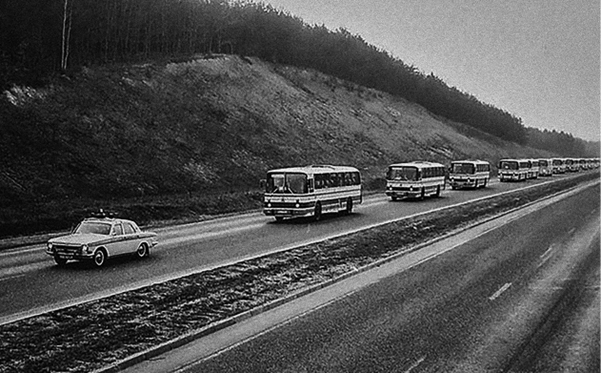
The initial evacuation zone covered a 30-kilometer radius around the plant, including the cities of Pripyat and Chornobyl, as well as the surrounding villages.
QUESTION:
What were the residents of Pripyat told before the evacuation?
CORRECT ANSWER
Residents were told that the evacuation would be temporary, lasting only a few days. On the morning of April 27, 1986 — 36 hours after the explosion — an announcement was broadcast over the radio instructing people to prepare to leave and gather near their apartment buildings. They were allowed to take only the essentials — documents, a minimum of personal belongings, and some food — without being informed of the real level of danger or given any guidance on radiation protection. In reality, radiation levels in the city had already reached life-threatening levels.
The evacuation began around 2:00 PM and was carried out in an organized manner: more than 1,200 buses arrived in the city, along with trains and private vehicles. Within a few hours, tens of thousands of people — approximately 45,000 to 49,000 residents — were evacuated from Pripyat. People left their homes believing they would return in a few days; however, this evacuation became permanent. Pripyat turned into an abandoned city that remains a lasting symbol of the tragedy of the Chornobyl disaster.
The “Shelter” Object
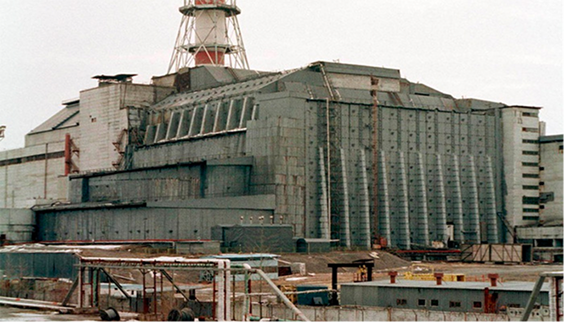
Action had to be taken quickly, so within 206 days the “Shelter” object was constructed over the destroyed reactor. However, due to the rushed construction, it had significant structural flaws.
QUESTION:
What was the purpose of the “Shelter” object built after the Chornobyl NPP accident?
CORRECT ANSWER
The “Shelter” object was created to isolate radioactive materials and prevent their further spread. As early as May 15, 1986, a decision was made to contain the destroyed fourth power unit by constructing a special protective structure, later known as the “sarcophagus.” Its primary purpose was to stop the release of hazardous radionuclides into the environment, as the reactor remained an open source of intense radioactive contamination after the explosion.
The construction of the “Shelter” lasted about seven months and was completed in November 1986. The work was carried out under extreme conditions of high radiation, often manually, using machinery, robots, and even helicopters. Around 90,000 people took part in building the structure, which was made of concrete and metal, incorporating both newly constructed elements and remnants of the destroyed power unit.
New Safe Confinement
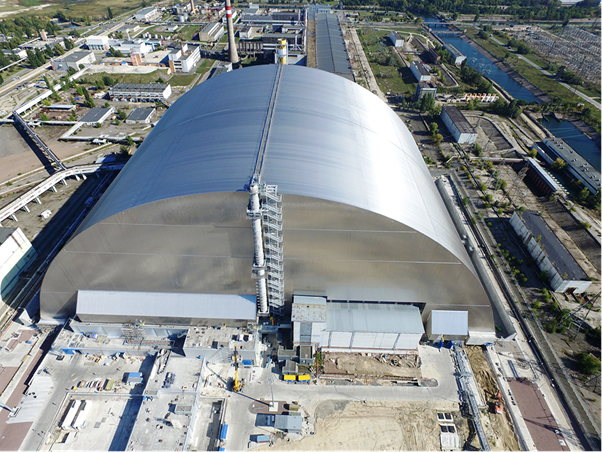
To isolate the “Shelter” and ensure proper conditions for working with radioactive materials, a new confinement structure was built. It is a complex, multifunctional system consisting of 19 subsystems, with its central element being a giant arch-shaped structure.
QUESTION:
When was the New Safe Confinement put into operation?
CORRECT ANSWER
2019 — that was the year when the New Safe Confinement was officially put into operation. Construction of the confinement structure lasted from 2012 to 2016, involving more than 30 countries under the coordination of the European Bank for Reconstruction and Development. In November 2016, the giant arch was slid into place over the old sarcophagus, completely covering the destroyed reactor.
Standing over 100 meters tall, the confinement became the largest movable land-based structure in the world. Its main purpose is to prevent the release of radioactive materials, ensure control over them, and create conditions for the safe dismantling of the old “Shelter.” In 2019, the structure was commissioned and became a symbol of how international cooperation can help overcome the consequences of the largest nuclear disaster of the 20th century.
New Threat: “Occupation of the Chornobyl NPP” (2022)
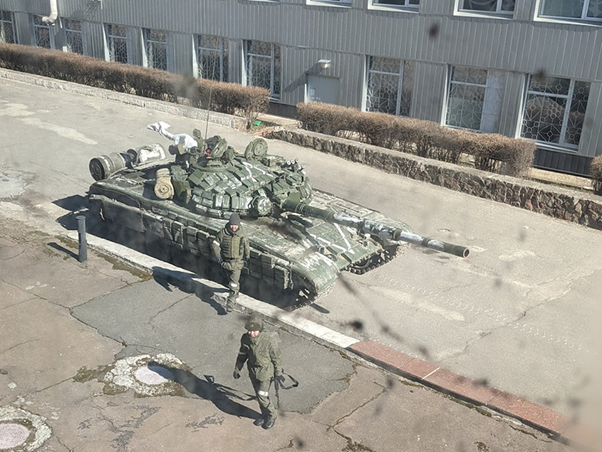
On February 24, 2022, Russian troops entered the Exclusion Zone, taking control of the Chornobyl Nuclear Power Plant and blocking its personnel, thereby creating a new nuclear threat for the first time since 1986.
QUESTION:
Why was the presence of military equipment in the Red Forest especially dangerous?
CORRECT ANSWER
The presence of military equipment in the Red Forest was dangerous due to the lifting of radioactive dust. During the occupation of the Chornobyl Nuclear Power Plant in 2022, Russian troops entered the Exclusion Zone on the very first day of the full-scale invasion — February 24 — and used it as a military base. Moving armored vehicles outside designated routes, particularly through the Red Forest — one of the most contaminated areas — they stirred up radioactive dust, causing a local increase in radiation levels.
The occupation was also accompanied by damage to infrastructure and radiation monitoring equipment, which complicated the assessment of the situation. During this time, Chornobyl NPP personnel were forced to work under the pressure of armed troops, maintaining the safe condition of the facility. Only in late March to early April 2022 did Ukraine regain control of the plant and begin addressing the consequences of the occupation.
Main Lesson
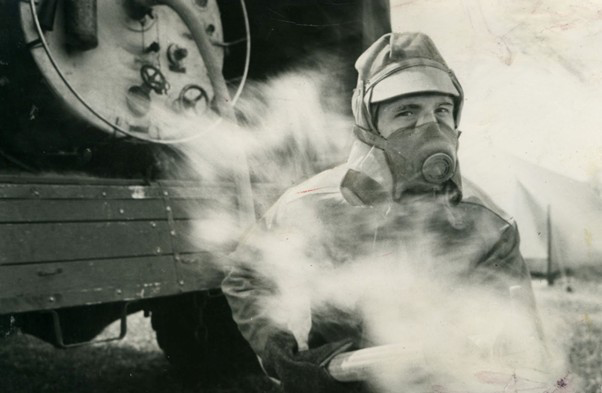
The disaster of April 26, 1986, became a global signal of the need for international cooperation in nuclear safety.
QUESTION:
What is the main lesson of the Chornobyl disaster for the modern world?
CORRECT ANSWER
Responsibility for safety, truth, and human lives. The Chornobyl disaster demonstrated the consequences that can arise from a combination of technical errors, negligence, and the concealment of information. A lack of transparency, delayed decisions, and the disregard of risks led to a large-scale tragedy that affected the lives of millions of people and the environment for decades.
The key lesson of Chornobyl is that safety must be a priority at all levels — from engineering decisions to state policy. At the same time, honesty and transparency are equally essential: society must receive accurate information, especially in critical situations. Chornobyl serves as a reminder that the cost of mistakes or silence can be extremely high, and that responsibility for the future lies both with governments and with every individual.
CONGRATULATIONS! YOU HAVE SUCCESSFULLY COMPLETED THE QUEST "Memory Zone. The Path Through Chornobyl".
/10 correct
Thank you for your participation and for honoring the memory of the heroes. May their feat never be forgotten!
CONGRATULATIONS! YOU DID A GOOD THING.
/10 correct
You answered several questions correctly, but there is still a lot of interesting things to learn about Chernobyl. We advise you to go through the quest again, familiarize yourself with historical facts and try to improve your result. Thank you for participating, the memory of the heroic defense of Kyiv should live in our hearts!
SORRY! YOU DIDN'T GET IT.
/10 correct
You did not answer any questions. We recommend that you complete the quest again.