Inhabitants of Tripillia
15th century BC found in TripilliaThe Tripillians were ancient peoples who inhabited the territory of modern Ukraine from the 6th to the 2nd millennium BCE. They were engaged in agriculture, advanced pottery making, textile arts, and metalwork. Pottery played a significant role in their lives, as evidenced by the discovered artifacts.
In the autumn of 1897, amateur archaeologist Vykentyi Khvoika made a discovery of cultural artifacts near the village of Tripillia, now known as the “Tripillian culture.”
However, it wasn’t until 2013 that pottery kilns with remarkably sophisticated construction were found. It turned out that the Tripillian kilns were older than previous findings in European archaeology by almost 3000 years. This difference not only pertained to their knowledge of clay and paint qualities but also to their ability to utilize heat technology, which allowed the pottery to retain its vividness without the soot that was characteristic of traditional kilns.
This newfound technological insight underscores the immense importance of pottery for the Tripillians. It has traversed through the ages and reached us in the form of unique artifacts that you can explore in our online exhibition.
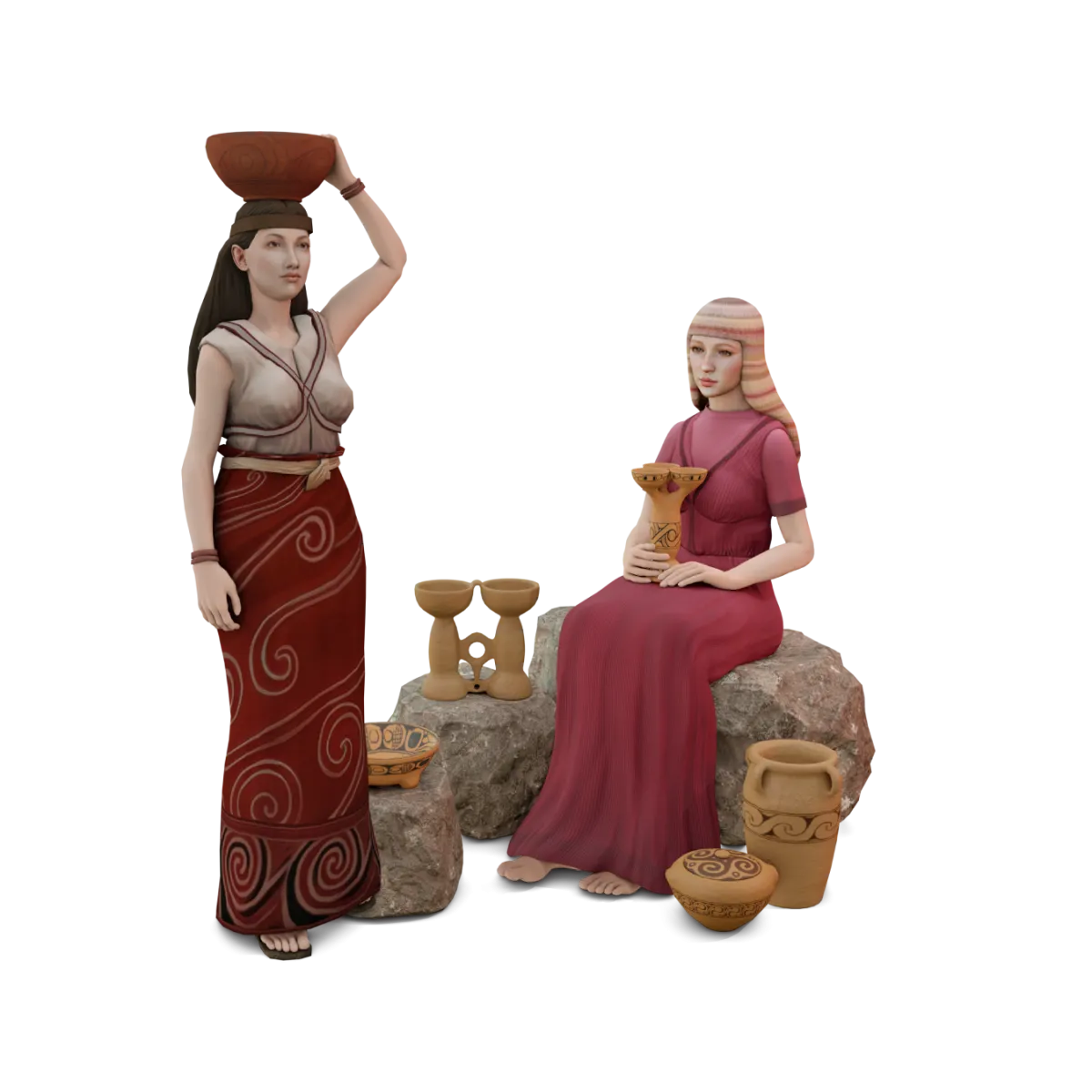
Virtual Museum Tour
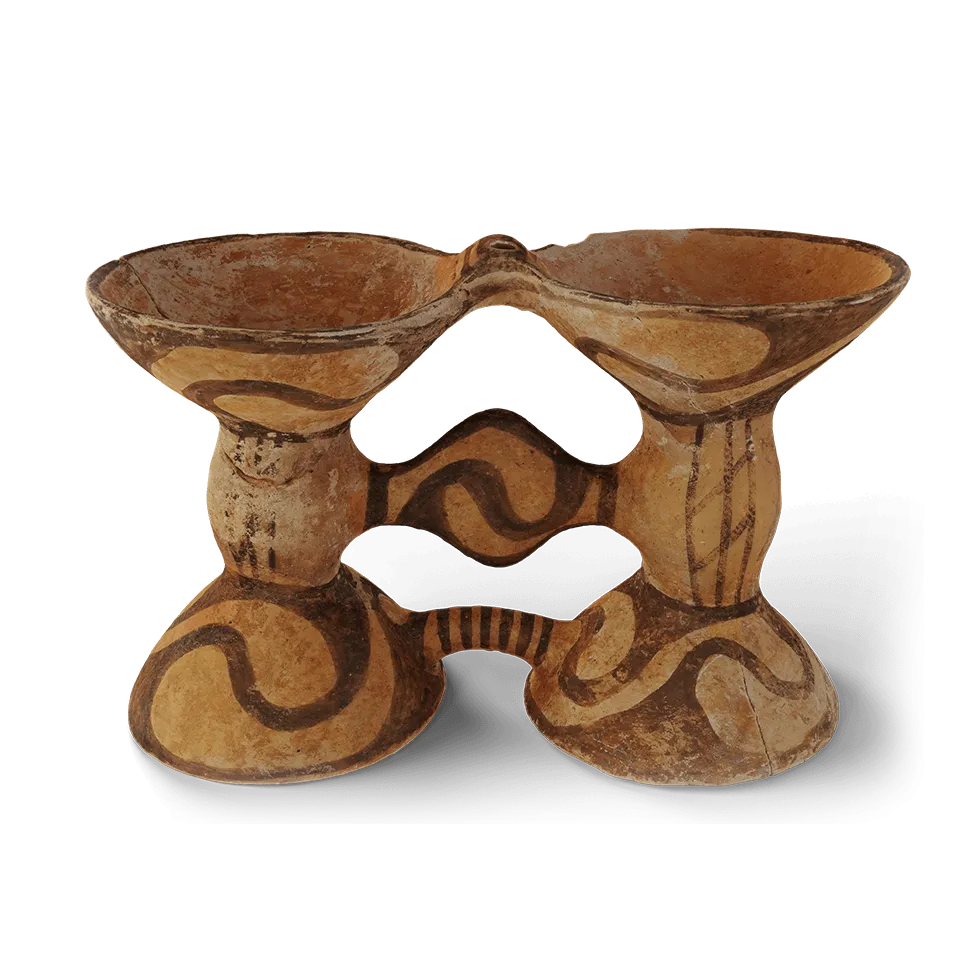
Binocular-shaped vessel with paintings
Around 4000-3900 BCA ceramic double vessel, crafted by hand and without a bottom, is adorned entirely with stylized depictions of snakes and ovals. It served a ritual purpose. The snakes symbolize both the female and male principles, much like the vessel itself, which, in one of its numerous interpretations, may signify the union of a pair.
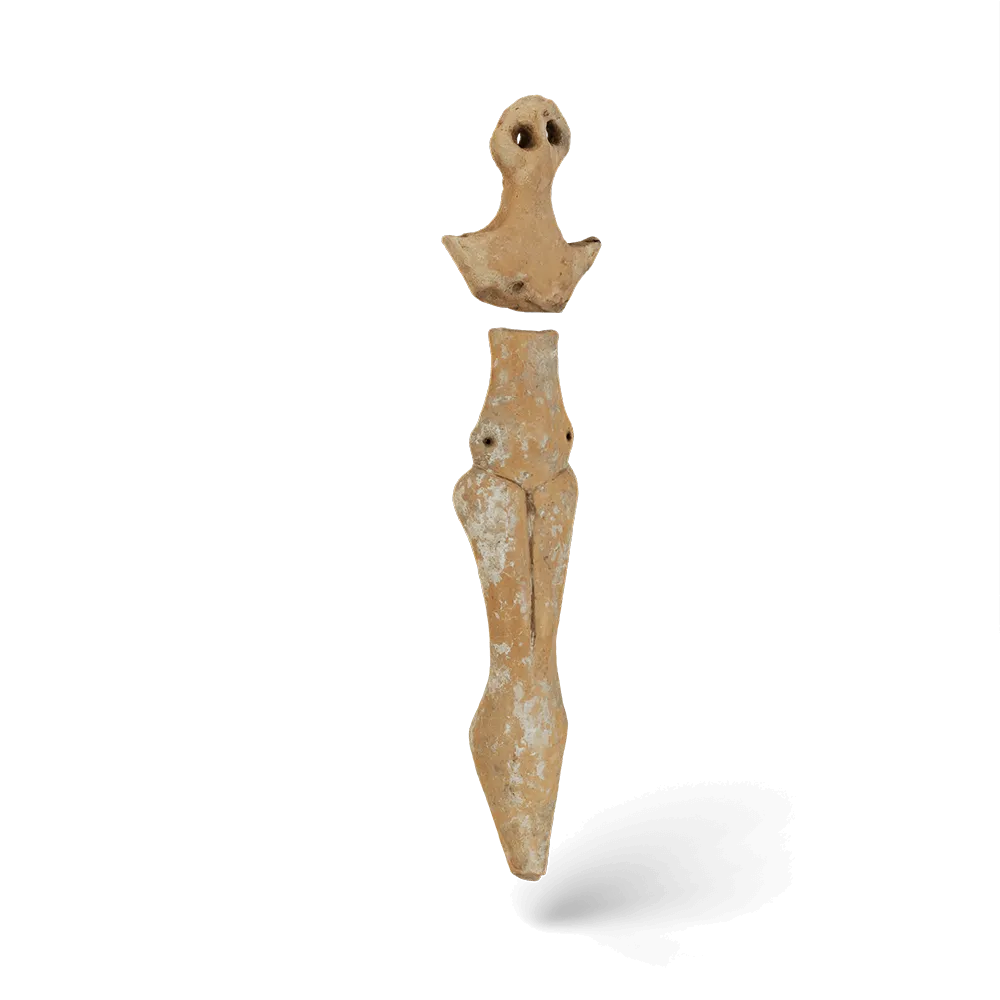
Anthropomorphic female figure
Belongs to the Tripillia stage C1 (3700-3200 BC)The representation of the Goddess-Virgin in Tripillian ceramics takes the form of an upright female figurine with pronounced hips, a slender waist, and petite breast protrusions.
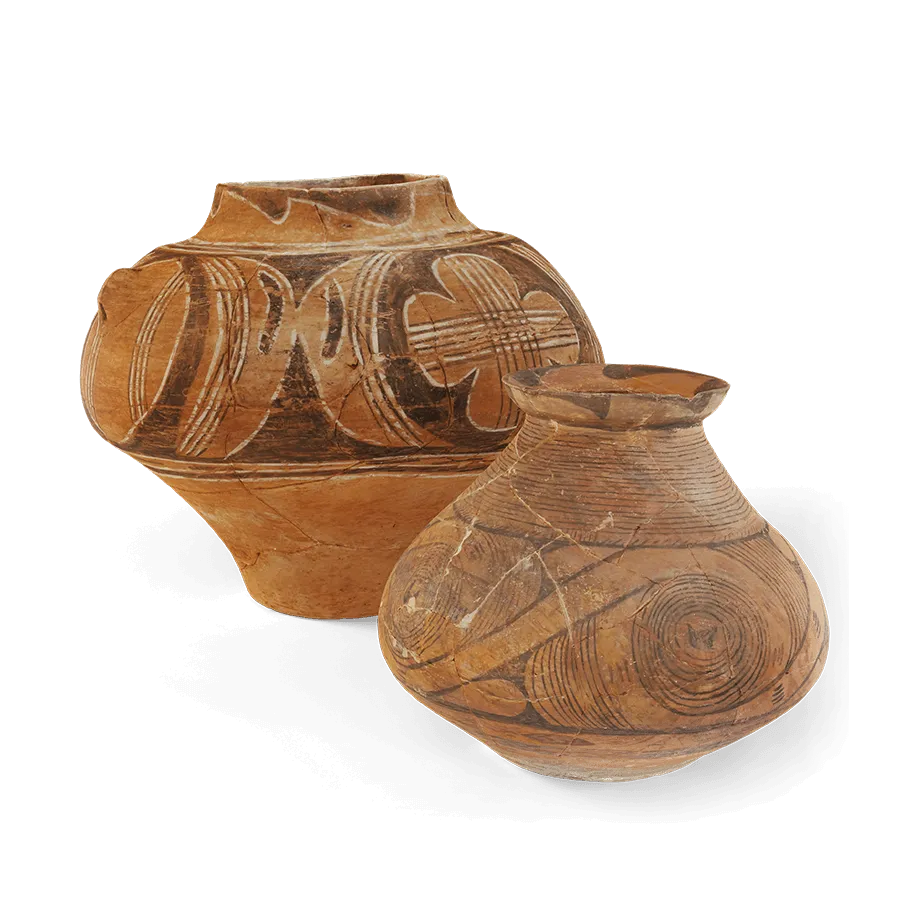
A restored ceramic vessel, measuring 15 cm in height, featuring paintings in dark brown and white, created with a mystical purpose. It falls under the category of anthropomorphic (human-like) pottery.
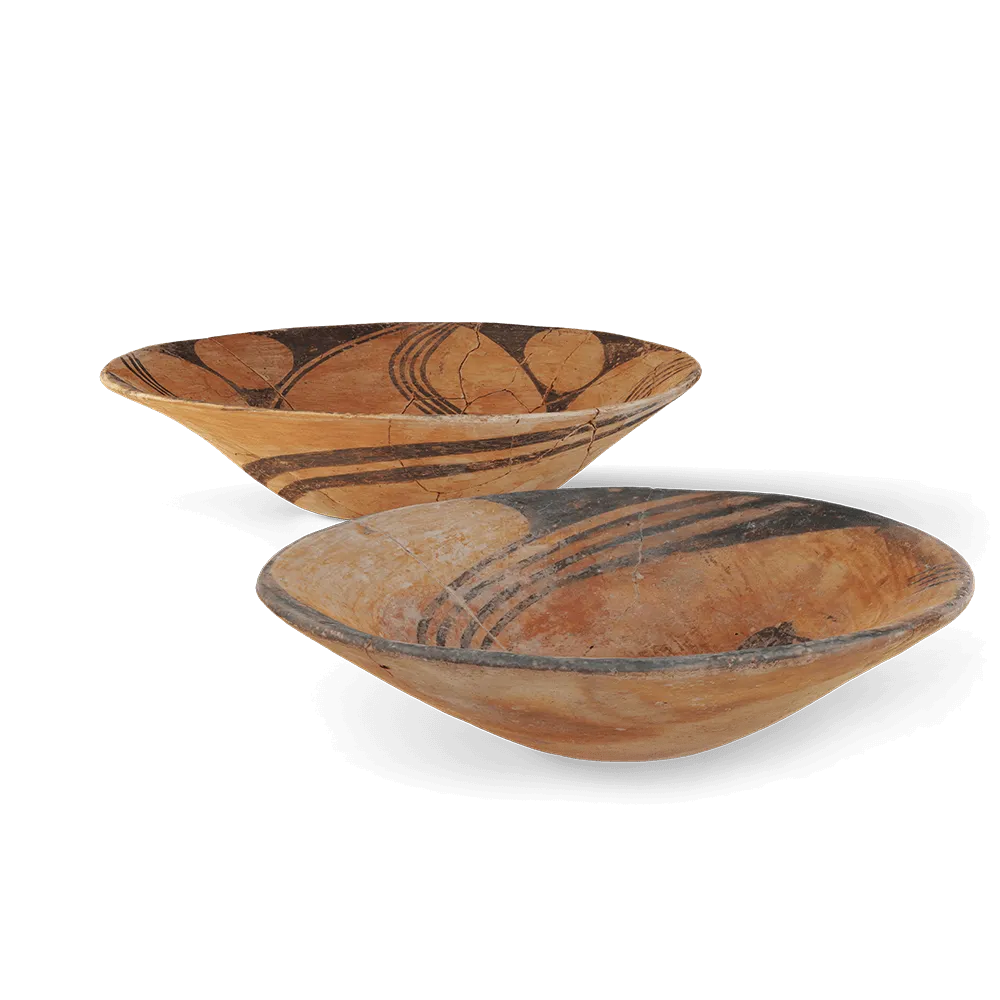
Represents the Volodymyr group of painted tableware. It is covered with yellow-cinnamon engobe with a painting painted on it with mineral dark brown paint.
A ceramic bowl with a diameter of 42 cm and a height of 13 cm, painted with engobe mineral paints. The ornamental composition consists of concave triangles, semi-ovals and wide lines that diverge from the bottom and create the impression of a fluid flow.
The composition of the painting features a pair of Moon Snakes, created through a combination of a snake symbol and the Moon, shaped by four parallel lines and crowned with a black circle. This symbolizes the merging of the potency of the full Moon (represented by the head of the Moon Snake) and the lines of its body (depicting water signs), forming a symbol of universal fertility known as the “bucranium”.
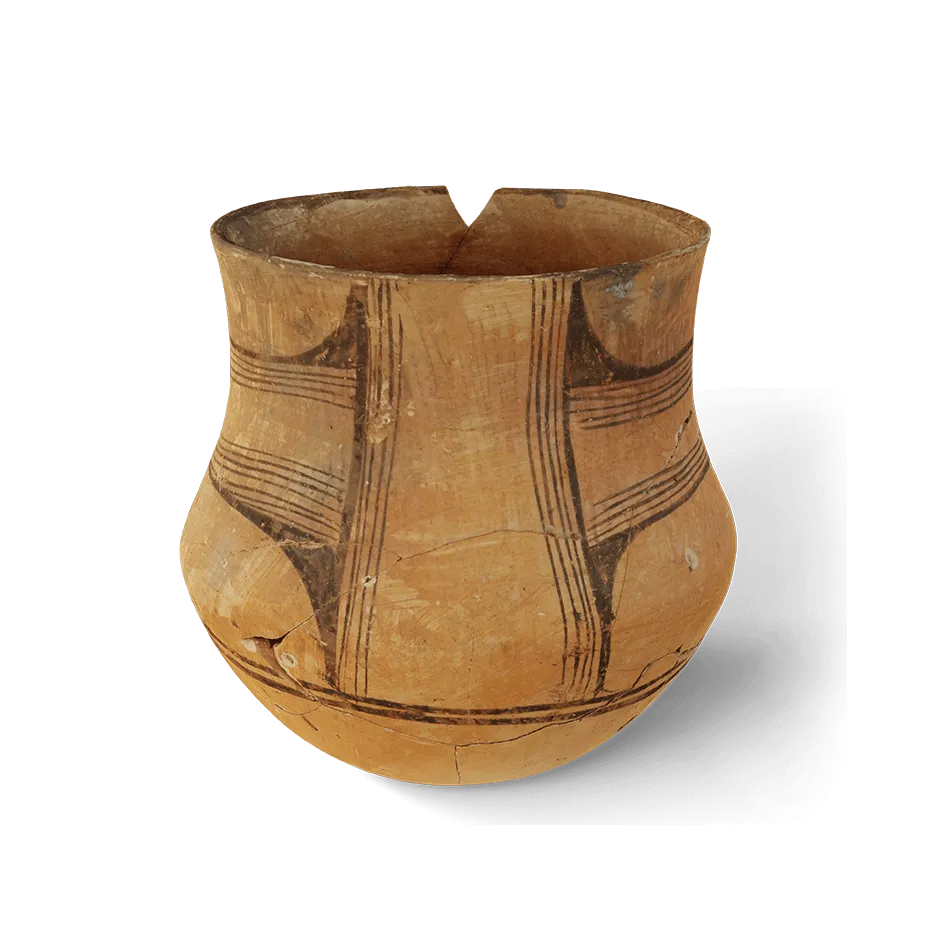
Cup
Around 4100-4000 BCThe ceramic cup stands at a height of 16 cm with a diameter of 14 cm. The painting composition, executed in mineral dark brown paint, is divided into four sections, with two of them featuring the “facial” motif. The sacred number 4 in Tripillian pottery corresponds to the depiction of lines symbolizing an “ascension,” a journey towards higher realms.
About the Museum
The Kyiv Regional Archaeological Museum officially commenced operations in May 2002, but its roots trace back over 80 years. On its journey to establishment, the museum overcame numerous challenges and emerged from the remnants of the Komsomol Glory Museum.

Museum
Kyiv Regional Archaeological Museum