A Library Is Not Only a Place to Store Books
For most Ukrainians a library is associated with a warehouse of books and something boring. When was the last time you were in a library? Probably during your studies at university or school, when you took out the textbooks you needed? Unfortunately, most of us have a mostly unpleasant experience with libraries, and because of this most people lose interest in them. This has become a particular problem over the last ten years, when thanks to the development of the internet most books became possible to find online.
But along with the decline in the popularity of libraries, the overall level of book reading is also falling. Because electronic versions of books, although they can replace paper ones, lose in competition with social networks and cinema, which is especially noticeable among the younger generation. Just look around when you ride the metro: how many people are reading? Very few; most are playing games or scrolling social media. Libraries, and with them the culture of reading, are steadily disappearing, which directly affects the general level of literacy. But what can be done in this situation? How can we bring back the popularity of books in a world of gadgets and the internet?
The answer is much simpler than you might think at first. We need to make the library a hub of technology and development. A very good example in this regard is South Korea. It is a country with a culture of learning, where people visit libraries regularly. Every library has good infrastructure for study and for reading books: from comfortable seats to chargers and computers. As a result, not only in university but also in public libraries you can see a large number of visitors reading books.
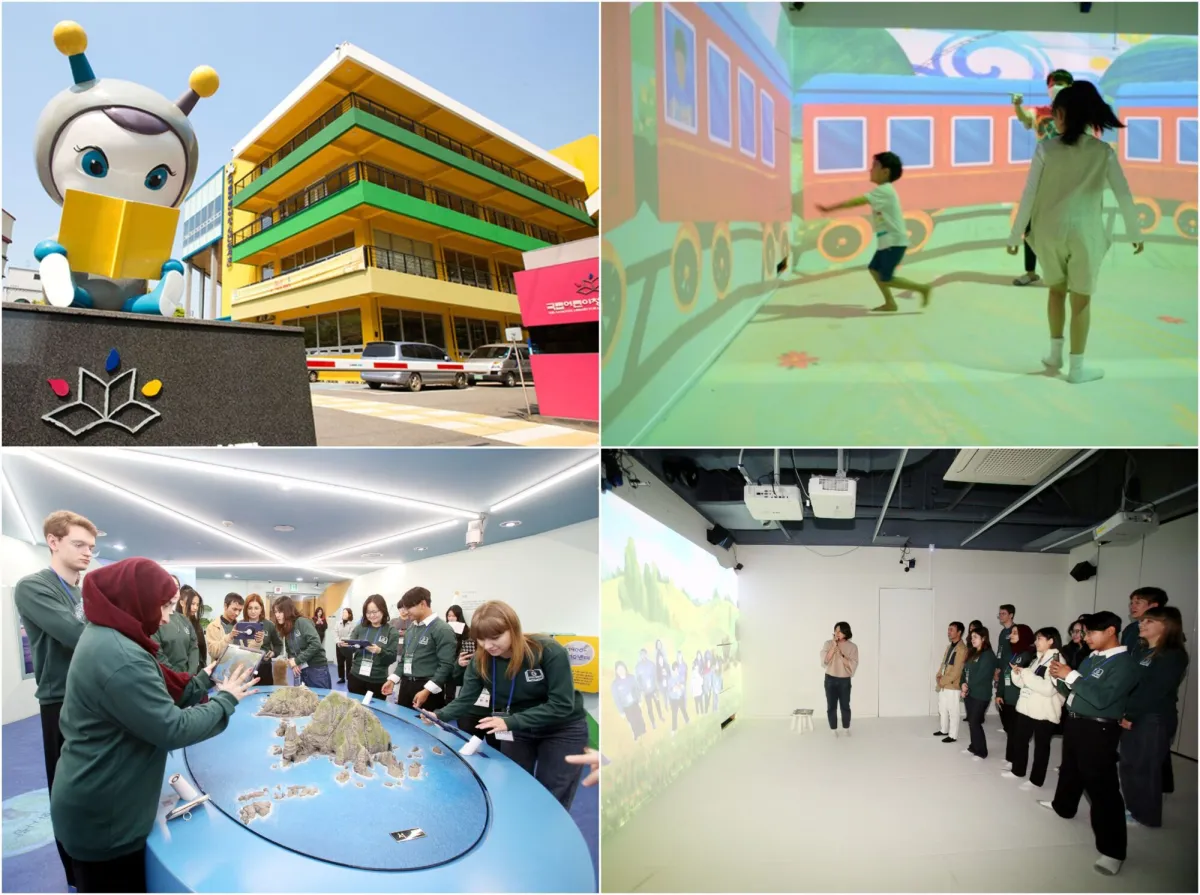
But the problem of children’s overuse of phones is just as relevant in Korea. To interest children in libraries and books, children’s libraries in Korea offer a large number of activities and entertainment programmes for children. A good example is the National Library for Children and Young Adults in Seoul. The library has plenty of activities for children that contribute not only to their interest but also to their overall development. Here you can not only read books but also view their projection with the help of a tablet, learn to drive a remote-controlled car and even program it yourself, and learn the basics of programming. There are also interactive rooms where a child can become part of a fairy tale. And as a keepsake you can make yourself an eco-bag with a picture of your own design, drawing the picture on special paper that will then be transferred onto the bag. Sounds like a technology centre rather than a library, doesn’t it?
While visiting this library, I realised that the definition of the word library changes with time. Now it is not only a quiet place for reading books and studying; it is a place where you can have fun and try many new things. I think this is very good for children, not only because they will have good and positive associations with libraries, but also because through these activities a child’s abilities and interests can be revealed, which will be useful in the future when choosing a profession.
To sum up, we can say that libraries need modernisation, and in order to prevent their disappearance we must change the traditional understanding of the library in line with the times. Libraries must now be not only a place for storing books but also a space for learning and technological development.



More articles