Boots in the Wardrobe of Ukrainians
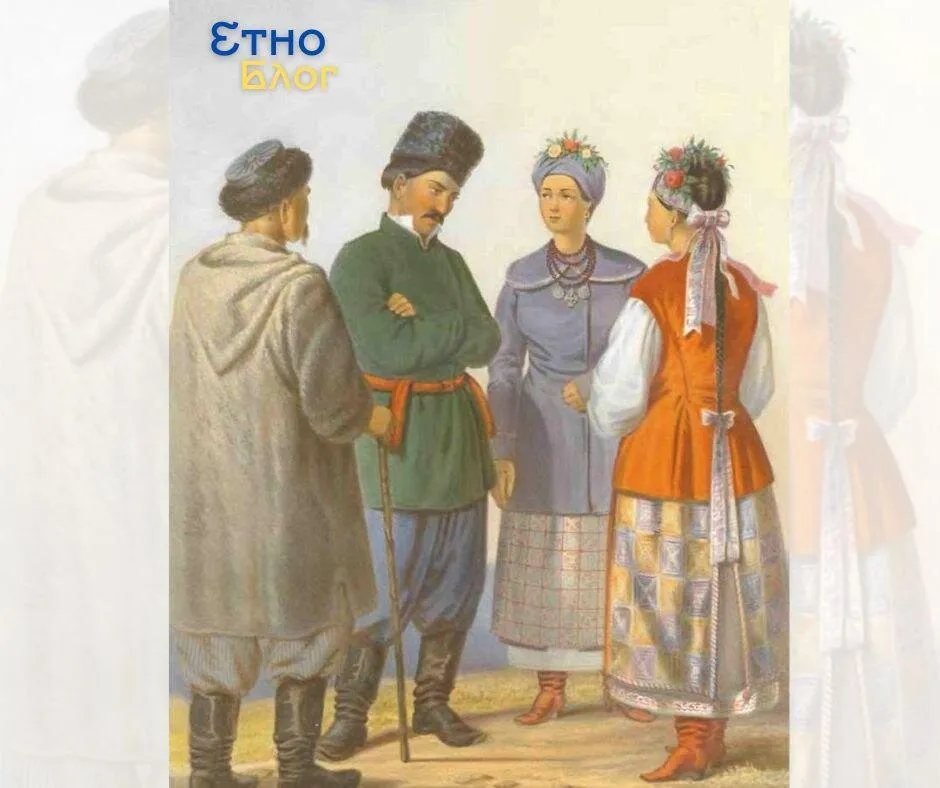
In the modern world, items of clothing are an object of close attention. It is worth noting that the situation was the same in past centuries. Footwear was no exception. It has always held a separate status in people’s lives. This is confirmed by numerous sayings and proverbs, such as: “You can tell a gentleman by his boot tops.” Today, using boots as an example of clothing, we will examine this subject.
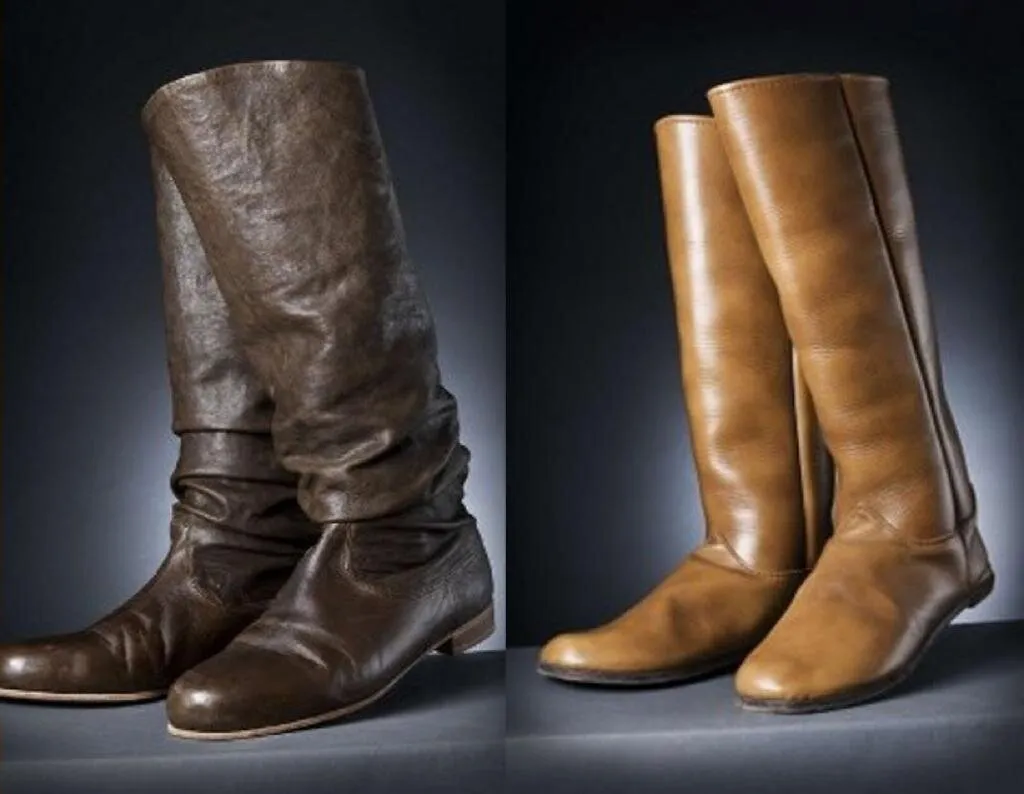
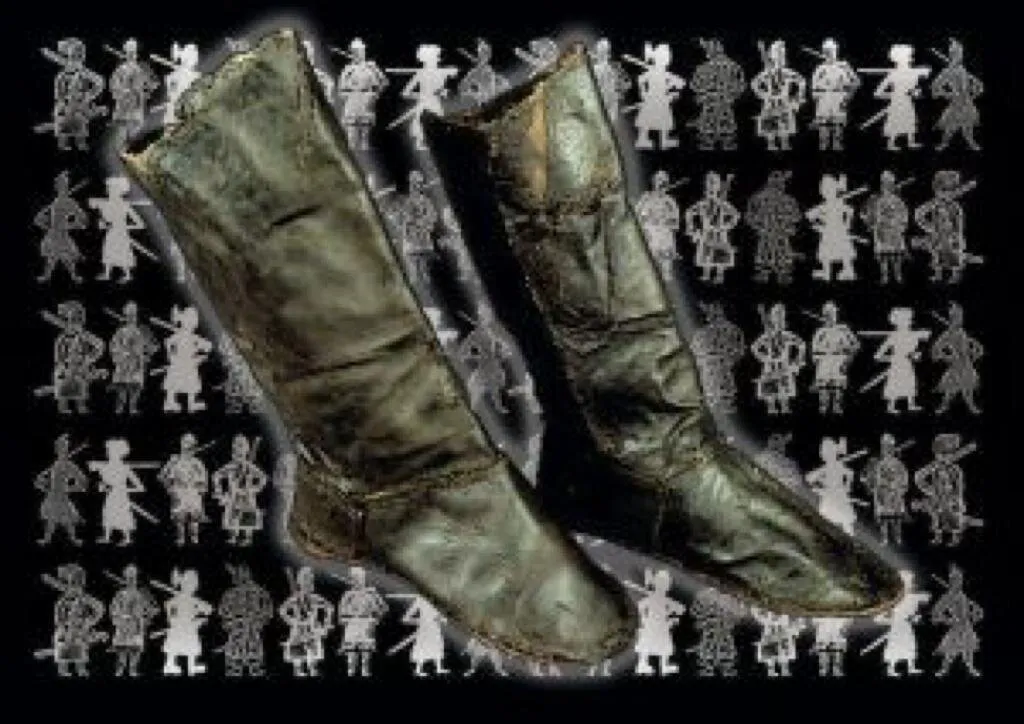
Boots have long been not only an indispensable element of Ukrainian dress but also a sign of prosperity and social standing. This type of footwear has been known in Ukraine since Old Rus times. The word “choboty” (boots) was used to denote footwear with heels, high tops and pointed toes curved slightly upwards. The cut of boots varied, as recorded in folk sayings: “What kind of shoemaker would he be if he made boots on one last for everyone.” Depending on the material, there were boots of cowhide, goatskin and morocco leather; as for colour, most often black and red, although green and yellow also occurred. Festive women’s footwear was “sapianets” (also called “chornobryvtsi”): boots of various colours made of thin soft leather (mostly goat, less often sheep or calf), with upturned toes, low tops and heels higher than men’s, often decorated with ornament. They were worn by wealthy women, mostly on holidays. Among men’s boots two types were common: those made of morocco leather, softer and coloured, were the dress footwear of the nobility, the Cossack officers and, more rarely, the Zaporozhians; coarser boots with stiff tops, mostly black, were the everyday footwear of townspeople, Cossacks and the ruling classes, and also served as folk footwear.
Since princely times, boots in Ukraine were a sign of status. In the chronicle passages about Prince Volodymyr’s campaign there is an interesting account of Volga Bulgar captives being released because they wore boots rather than bast shoes (the footwear of simple peasants). Prince Danylo of Halych, according to “Rus custom”, wore green morocco boots decorated with gold.
From the second half of the 16th century, boots in Ukraine became the main footwear of the nobility as well as of townspeople and Cossacks. Until the end of the 19th century, wearing shoes was uncomfortable: they were made on one last, for both the left and the right foot. The main footwear of registered and unregistered Cossacks in the 17th century was leather boots, either with low tops reaching mid-shin, or high ones “above the knee”. Meanwhile, the Cossackised population wore leather moccasins (khodaky) or rawhide sandals (postoly). Boots were precisely a marker of social status. Boots entered peasant life only at the end of the 18th century, mainly among wealthier peasants, and remained a sign of social belonging and material well-being.
In folk traditions, boots served as a symbol of fertility and conception, of sacrifice, and a sign of exchange, harmony and understanding. They were often used in the wedding ritual: a young man gave his chosen one boots to show serious intentions; the groom gave his mother-in-law cowhide boots as a sign of reconciliation between the two families (“These are the boots the son-in-law gave. And for those boots he took the daughter”); the girl took off her groom’s boots as a sign of submission and affection, then struck him with the boots to increase the fertilising power. After all, it was an expensive gift that showed not only the attitude towards the future wife or mother-in-law but also the groom’s economic independence. For the absence of outerwear and footwear was in the popular imagination a sign of poverty, and often an indicator of laziness: “Winter is bad for him who has no sheepskin coat, whose boots are worthless, and who has nothing to eat.”
To imagine the standard of living of a typical middle-income Ukrainian peasant family a hundred years ago, already under Soviet conditions, it is worth looking at the income of a typical peasant household in 1923. With a grain harvest of 200–210 poods, about 252 poods were needed to pay taxes and charges, for seed, food supplies and the upkeep of livestock. Thus the peasant budget was in deficit even without counting expenses for clothing, lighting, tools and so on. Moreover, as of October 1923 a pair of boots was equivalent in price to 45 poods of rye. The deficit could be reduced by cutting the food norm and doing without manufactured goods. Therefore the majority of peasants went barefoot, especially women and children; boots were in fact a luxury for most members of large peasant families. This meant sitting in the house all through the long winter, waiting for spring. Usually a peasant, getting ready in winter for the village assembly or the market, gathered the clothes of two or even three family members. Hence the saying “whoever got up first put on the boots” reflected the everyday reality of Ukrainian society.
Oleksii Lukashevych,
Candidate of Historical Sciences,
Director General of the Pereiaslav National Historical and Ethnographic Reserve



More articles