MEDICAL CARE IN UKRAINE IN THE EARLY 20TH CENTURY
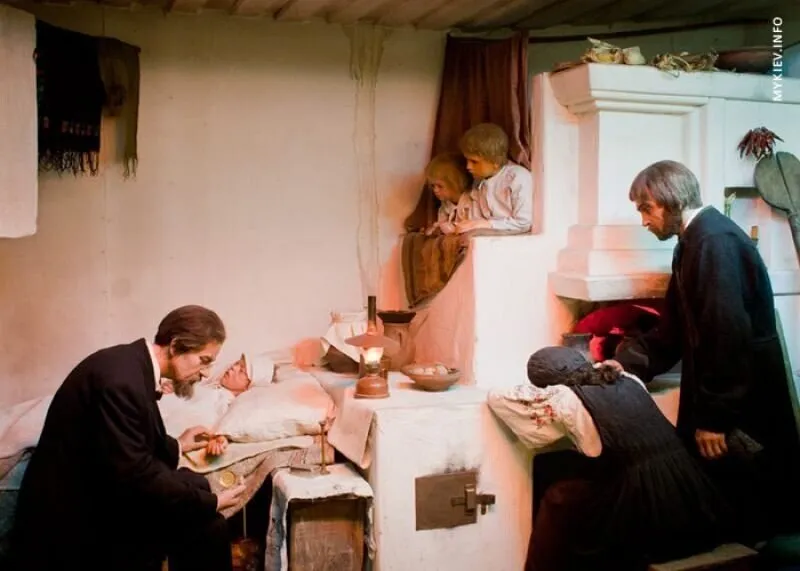
One of the most telling indicators of the quality of life of the population of any country is medical care. The Russian Empire left Ukraine a legacy of a low level of literacy, underdeveloped infrastructure and a low standard of living for the lion’s share of the population, the overwhelming majority of whom were peasants. As of 1927, the rural population made up 81.7% of all residents of the Ukrainian SSR.
Until 1917, medical care for the rural population of Ukraine was provided by zemstvo medicine. Rural districts were mostly of an outpatient-and-hospital type. Inpatient surgical care was provided in most rural hospitals, and outpatient care in all medical districts. The material basis of zemstvo medicine was zemstvo taxes on peasants. In the Soviet period medical institutions came under state jurisdiction and were funded from state and local budgets. But since rural medicine was financed from meagre local funds, in the 1920s some rural medical districts had to be closed.
Rural network of medical institutions
Year | Number of medical districts | Number of hospital beds | Number of paramedic stations |
1 October 1922 | 1459 (of which 774 hospital districts) | 20943 | 888 |
1 October 1923 | 1420 (including up to 697 hospital districts) | 10369 | 410 |
On average across Ukraine there was one hospital bed per 2,000 rural residents, ranging by province from 1,581 in Donetsk to 3,200 in Podillia. This was caused by insufficient funding of rural medicine in the 1920s. Despite the annual growth of Ukraine’s local budget, the share of health care in the local budget decreased. This affected the quality and quantity of the medical and sanitary network of the Ukrainian village. Compared with the pre-revolutionary period, the state of rural medicine improved somewhat, but it could not meet the needs of the peasantry.
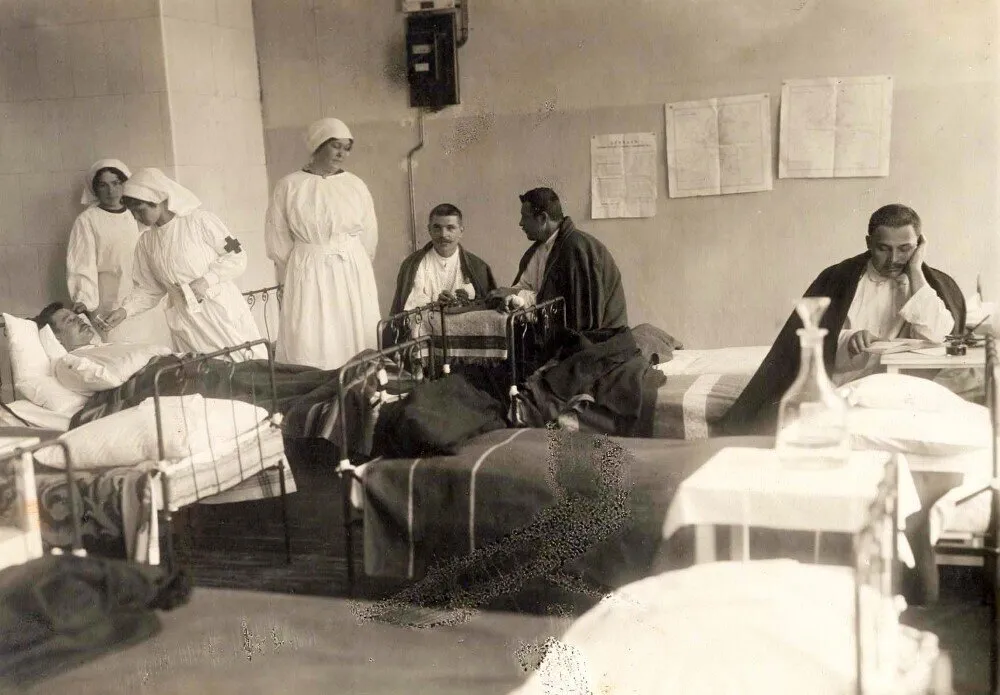
The work of a doctor in the countryside at that time was a true act of dedication. A rural doctor’s working day lasted almost around the clock. The magazine “The Path to Health” published a typical daily routine of a rural doctor: 8:00 – morning breakfast; 9:00–11:00 – hospital rounds; 11:00–13:00 – urgent visits to neighbouring villages; 13:00–14:00 – visiting patients; 16:00–18:00 – lunch; 18:00–20:00 – home visits to the sick; 20:00–22:00 – lecture at the club; 22:00–01:00 – call to a birth; 01:00–08:00 – sleep.
A rural doctor also went out on urgent calls, sometimes 20–25 km away; such a trip could last from 4 to 12 hours. The doctor was often summoned to court as a witness or an expert, and for failing to appear could be fined 1 ruble. In 1922 the salary of rural medical staff was paid “in kind”: 11 poods 30 pounds of grain (188 kg). So it was necessary to cultivate a household plot. In 1926 a rural medic’s salary was 80 rubles.
The material base of the rural medical network was also in an unsatisfactory state. For example, the arsenal of one rural outpatient clinic in the Mykolaiv region included only a syringe, a tube and a thermometer among its instruments, and furniture, mostly from landowners’ manors, in poor condition. Medicines were received very rarely and in meagre doses.
To call a doctor to the house, one had to find a cart and go to fetch him. This was especially difficult in bad weather or in winter, when roads were washed out or snowed under. It was somewhat easier for residents of villages near towns, because the urban medical network was far better equipped technically and with staff.
Since the Ukrainian peasantry had a great store of medical knowledge, bonesetters, healers, whisperers and folk doctors often took the place of medics. Their popularity among the rural population was due not only to the absence of qualified medical aid but also to the fact that their methods were often effective. Although unprofessional cases were also common, for example infection being introduced to women in childbirth. The Bolsheviks did not recognise folk medicine and persecuted its practitioners. They fought them not only by administrative but sometimes also by physical methods. In the 1920s the periodical press printed material portraying the activity of healers as inhumane. But at that time, without bonesetters and midwives, the village would have been left without any help at all. In particular, in the 1920s typhus, smallpox, anthrax, tuberculosis and venereal diseases were widespread in the Ukrainian village, and child mortality, which took the most lives, was extremely high. In 1928 child mortality in the village was 15.1%. Among the causes were improper feeding, infectious diseases and respiratory illnesses.
Infectious diseases were mostly caused by unsatisfactory living and sanitary conditions of life and work, and by non-observance of elementary hygiene norms. The main cause of the mass spread of venereal diseases was the low cultural level and disordered sexual life of peasants.
Thus, rural medicine in the pre-collective-farm period could not provide a decent level of medical care. The main reasons for this were economic factors. In addition, in the Soviet state priority was always given to developing urban infrastructure. This was reflected in the ratio of medical institutions and medical staff to the rural and urban population. The rural medical network was transferred to the local budget, but since the village was the main source of income in the USSR, almost everything was taken away from the rural budget. The unsatisfactory state of rural medicine in that period negatively affected the health of peasants, their daily life and the performance of farm work.
Oleksii Lukashevych,
Candidate of Historical Sciences, Associate Professor,
Director General of the Pereiaslav National Historical and Ethnographic Reserve


More articles