A Place of Great Tragedy, or the Restoration of Ecology?
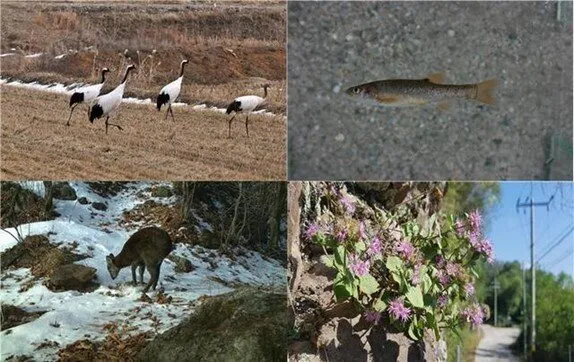
What do the Chornobyl Exclusion Zone, created in 1986 as a result of the accident at the Chornobyl Nuclear Power Plant in Ukraine, and the Korean Demilitarized Zone (DMZ), created in 1953 as a result of the Korean War, have in common?
What comes to mind right away? The deaths of thousands of people and pain, pain that is still felt today. The main reason for creating the demilitarized zone on the Korean Peninsula is the war that divided a single country into South and North Korea and in which many people died and families were separated. The exclusion zone, meanwhile, was created because of the accident at the Chornobyl Nuclear Power Plant. Radiation caused the deaths of thousands of people and made a 30-kilometre territory unfit for life for many decades.
Despite the fact that these zones were created as a result of terrible tragedies, not all the consequences we can observe now are negative. Since there are no people in this area and no harmful human impact on the environment, the ecological state of these territories is gradually being restored to its pristine condition. In addition, these zones have become a refuge for animals that flee from human influence or are threatened with extinction worldwide.
For example, in the demilitarized zone on the Korean Peninsula nature has almost returned to its original state thanks to 70 years without human influence. Many species of animals and plants that were once widespread in Korea are now hard to see outside zoos and botanical gardens. The reason is the almost complete absence of wild territories that have not experienced human influence. However, the DMZ is gradually becoming a territory that has been free of human influence for decades. The last Himalayan bear in South Korea died in 1983, but it has been confirmed that these bears still live in the demilitarized zone on the Korean Peninsula. In addition, animals such as the long-tailed goral and the musk deer, which are endangered species in the world and are listed in the Red Book, also remain in the DMZ. A large number of animals and birds, including cranes, choose the DMZ for wintering, one of the reasons for which is precisely the absence of people.
The same is true of the Chornobyl Exclusion Zone in Ukraine. Many wild animals now live here that can hardly be met in other regions of Ukraine. Many endangered animals live in the exclusion zone, in particular brown bears, European bison, Przewalski’s horses, raccoon dogs, lynxes and black storks. In addition, the towns that once stood on this territory are turning back into forests.
Thus, the Chornobyl Exclusion Zone and the Korean Demilitarized Zone, although places of terrible tragedies, have at the same time become a centre of wild nature and of ecological restoration. In addition, these zones have become refuges for endangered animals and places where they can live in the wild. So I hope that these territories will become nature reserves where endangered animals and plants will be preserved from extermination in the future.



More articles