Personal Hygiene of Ukrainian Society in the Early 20th Century
The beginning of the 20th century in the life of Ukrainian society was marked by the First World War, the events of the revolution and the national liberation struggle, Bolshevik and White Guard occupation of Ukraine, and the first artificial famine, which affected the southern regions in 1921–1923. Thus, a hundred years ago the Ukrainian people (four fifths of whom were rural residents) went through a series of military-political and socio-economic upheavals. This, of course, affected the standard of living and the sanitary and living conditions of peasants in the 1920s, which were at a low level. A shortage of basic necessities led to the spread of infectious diseases.
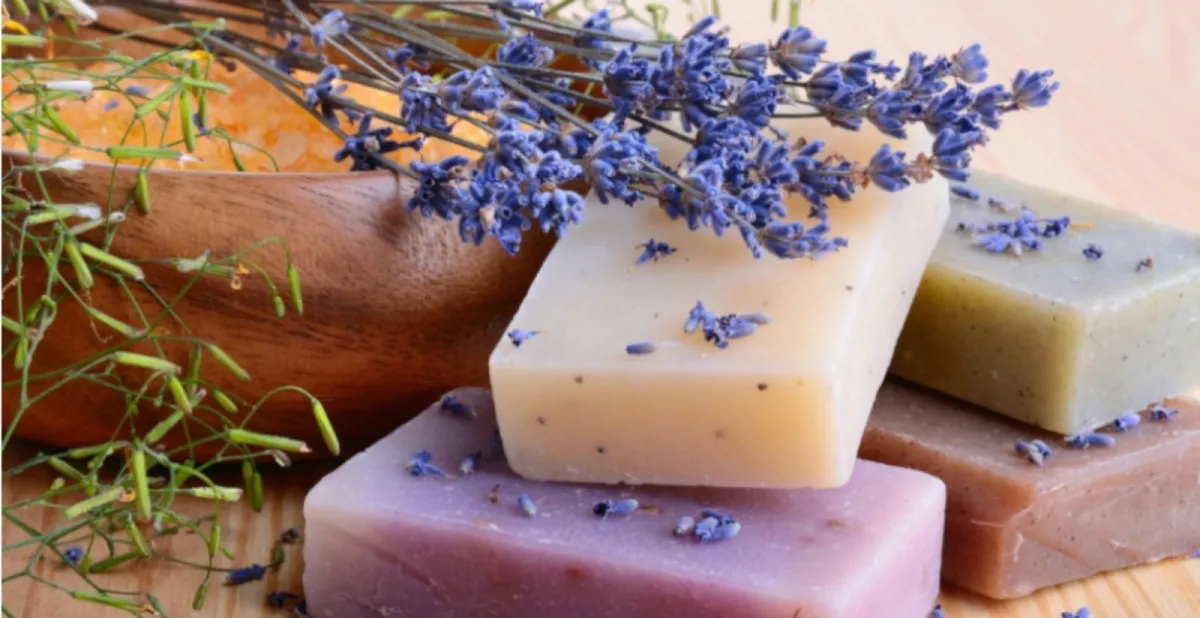
An indicator of the population’s sanitary culture can be considered the quantity and frequency of use of cleaning products. The real picture of soap use can be seen from the results of a survey of 8,177 peasant houses with 43,000 residents.
Amount of soap used per month:
Did not use at all | Less than 1 pound | 1 pound | 2 pounds | 3 pounds | 4 pounds or more | |
Percentage of the population out of the total number surveyed | 23% | 22,8% | 6,1% | 16,9% | 5,8% | 5,4% |
Thus, it can be stated that 72% of Ukrainian peasants used extremely little soap. The group of those “completely without soap” included the typically Ukrainian (non-industrial) provinces, whose population had a rather low standard of living (Volyn, Podillia, Poltava, Kharkiv and Chernihiv). The southern provinces had the best supply of cleaning products: Katerynoslav, Donetsk, Odesa. Kyiv province had average indicators. Soap supply was best in the southern provinces, weak in the central ones and very weak in the northern ones.
Thanks to the greater economic capacity of peasants in the southern provinces and the influence of numerous industrial centres and other ethnic groups, a higher sanitary culture and healthier way of life formed in southern Ukraine, and hygienic habits, especially regarding cleanliness and body hygiene, were more widespread.
In conditions of economic collapse, cleaning products usually become scarce goods (as in the 1990s), and the population’s purchasing power falls. In 1925–1926 in Ukraine the average annual income per household was 921.92 rubles, while 1 kg of soap cost 54.5 and 46.8 kopecks respectively. Therefore a hundred years ago almost 90% of the rural population were indeed an “unwashed realm”, and the basics of hygiene in rural life needed improvement. The folk “substitutes” for soap were “folk methods”: birch whisks for washing in the bathhouse; for laundry, ash and chicken droppings in which the linen was soaked, then washed in hot water and rinsed in the river.
In rural life of that time washstands were practically absent. Of 7,950 rural dwellings surveyed in 1924, washstands were found in 183 houses (2.3%). Washing the face and hands in winter was usually done in the house over the place where slops were collected, and in summer in the yard. Water was drawn from a bucket with a dipper and poured over one’s hands (or water was taken into the mouth and poured out onto the palms to wash the hands and face). Because of this the dipper got dirty from the hands, and from it the water in the bucket, which was also used for drinking. A survey of 8,106 houses (42,791 people) showed that only 9% washed with soap daily, 25.2% sometimes washed with soap, and 68.8% of Ukrainian peasants did not wash with soap at all. Thus, in peasant life hands were washed during general washing once a day, in the morning, with cold water, mostly without soap. This factor of Ukrainian life led to the spread of infectious diseases from which Ukraine suffered in the 1920s.
Among the causes of the wide spread of infectious diseases in that period was the towel. Ukrainian embroidered towels have long been considered one of the calling cards of our people, playing a great role in rituals and having a certain sacred meaning. But the main purpose of a towel is hygienic. In 1924 the percentage of the population that did not use a towel at all when washing was 1.6% (the poorest part of the population), while 96.6% of rural residents used one towel shared by the whole family. Usually it hung near the washing place and was used to dry themselves by both family members and guests. The cause of the shortage of towels was the cost and long time needed to make them by handicraft methods, while industrially made cotton-and-paper towels were not yet widespread. In addition, the economic capacity of peasants did not allow them to buy them. Therefore the general hygiene culture of the population was, unfortunately, quite low.
Washing the body is important in personal hygiene. In Ukraine in the 1920s the tradition of frequent and regular body washing was not widespread. A 1924 survey covering 5,831 houses revealed the following results: 17.1% of the rural population washed once a week (with quite a large range: in the Odesa region 37%, in Podillia 2.8%). Twice a month 1.6% bathed (the percentage was approximately equal across all provinces of Ukraine). Once a month 18.4% of peasants washed. Less than once a month 62.9% of peasants out of the whole rural population washed. These data are confirmed by the words of eyewitnesses: “And who bathed? Just before Easter, or before Christmas, mother would heat water and stand in the trough, and can you really bathe like that?”
In summer people bathed mostly in the river or pond. In winter 93.9% of the rural population of Ukraine washed in a trough, 4.5% in tubs made of painted or galvanised metal. 1.6% of the population bathed in bathhouses, mostly in Volyn province and near industrial cities, where public baths operated at enterprises. Only troughs were economically affordable for peasants, and they were the most widely used in daily life. Since bathing in a trough is inconvenient, the habit of frequent body washing could not spread widely among the Ukrainian peasantry, and if we take into account that in winter the whole family spends the entire day in a single room-kitchen, this complicated the situation.
Linen plays an important role in personal hygiene. Like towels, peasants made it themselves, so it can be assumed that there was little of it. How often adults and children changed their linen in the pre-collective-farm period can be seen from the survey data of 8,100 peasant houses.
Frequency of changing linen of the rural population in the 1920s:
Frequency of changing linen | More often than once a week | Once a week | Twice a week | Once a month | Twice a month | Less often than once a month |
Adults | 90,2% | 2,9% | 5,7% | 1,2% | ||
Children (under 5 years) | 14% | 79,8% | 3,1,% | 2,2% | 0,9% |
Thus, the vast majority of the adult and child population changed their linen weekly, which was a positive factor, evidently connected with the established habit of frequent linen changes that did not disappear even in times of scarcity. But the linen was changed without washing the body at the same time, so the hygienic value of changing it often lost its effectiveness. This situation led to the fairly wide spread of parasites such as lice, the most dangerous from an epidemiological point of view. 28.8% of peasants in the pre-collective-farm period had lice, which testifies both to an unsatisfactory sanitary state and to the population’s difficult level of economic provision.
Oleksii Lukashevych,
Candidate of Historical Sciences, Associate Professor,
Director General of the Pereiaslav National Historical and Ethnographic Reserve



More articles