Eighteenth-century works by foreigners about Ukraine
By the end of the 17th century Ukraine had clearly established itself in the minds of the European political establishment as an important geopolitical actor. For instance, the Dutch resident in Moscow, I. V. von Keller, in his letters to his government in 1677–1679 called the Ukrainian lands nothing other than Ukraine, with its capital in Kyiv, and the Ukrainian Cossacks “the beauty of the Cossack nation”, courted by both Turkey and Muscovy. In the summer of 1679 he wrote that the most important and richest Ukrainian city, Kyiv, “is now becoming like a bride wooed by the Turks, the Tatars and the local cavaliers”.
However, in the 18th century the division of Ukraine between Poland and Russia took shape, which resulted in grave socio-political conditions, the imposition of serfdom, heavier military duties, an offensive against the Cossacks and the destruction of Ukrainian autonomous traditions. Russia’s participation in the Great Northern War increased the plunder and exploitation of commoners in Ukraine, and the wide use of Cossacks to serve the monarchy’s military interests exhausted them.
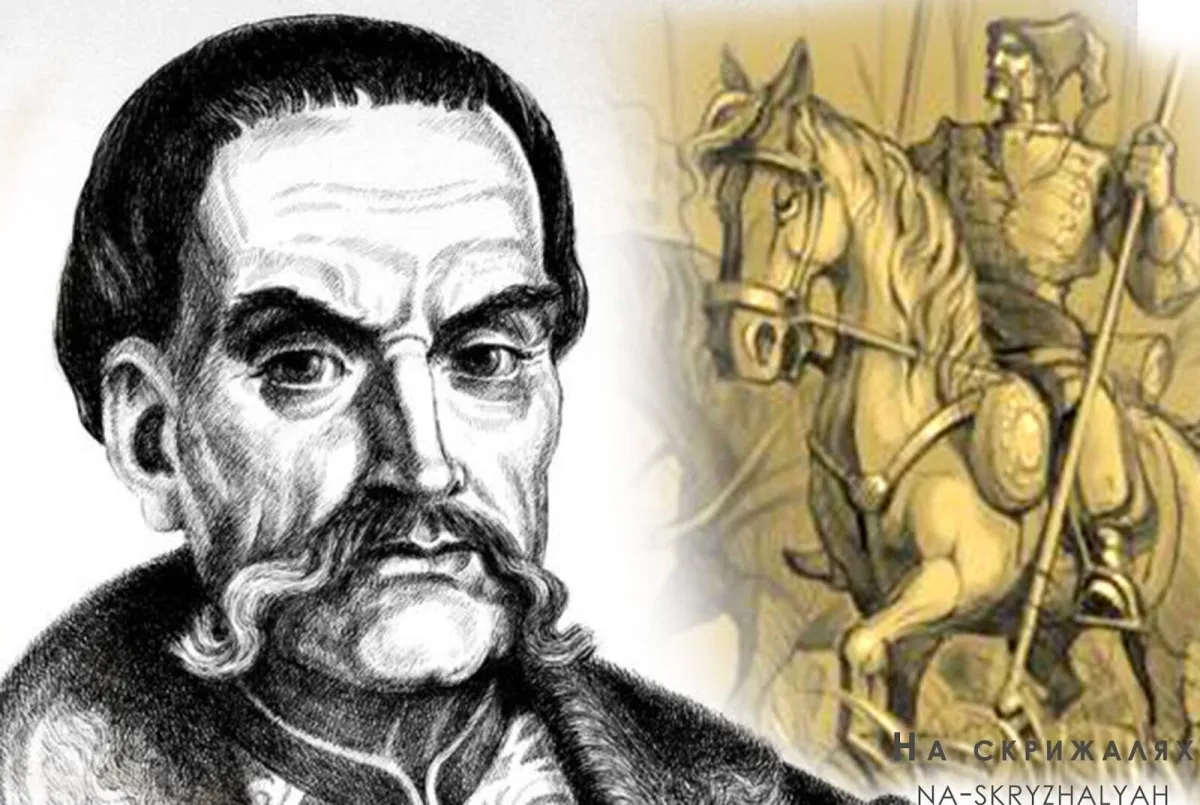
After I. Mazepa’s attempt to break free from the tsar’s hand and win independence for Ukraine in alliance with Sweden, the hetman became perhaps the most controversial figure in domestic and foreign literature. Politicians, historians and artists turned to his image: an erudite and intellectual who spoke several foreign languages, a patron and connoisseur of art who was fond of collecting weapons, had a large library and was a generous patron of Ukrainian art. His unexpected move against the Russian monarch on the side of Sweden made a great impression on European public opinion. In fact, thanks to Peter I’s victory over the Swedes at the Battle of Poltava in 1709, Russia gained the status of a great European power, which determined the further fate of Cossack Ukraine. Foreign guests increasingly compared Cossack Ukraine with the Russian monarchy. And the European community was shaken by the news of the brutal reprisal by the Muscovites against the peaceful inhabitants of Baturyn, in revenge for Mazepa’s military action.
At the end of 1704 the French diplomat Jean Baluze was in the Cossack capital and described the land of the Cossacks in his work “Description of a Journey to Baturyn”. He was struck by Mazepa’s education and intellectual level: he spoke German with German doctors, Italian with Italian craftsmen, and with the envoy he conversed in perfect, “refined and elegant” Latin, assuring him that he did not know French well, although the envoy noticed French and Dutch newspapers in the hetman’s possession. He goes on to write of Mazepa: “He is highly respected in the Cossack land, where the people, freedom-loving and proud on the whole, have little love for those who rule them. Mazepa won the Cossacks over by firm authority and great military courage… conversation with this ruler is very pleasant, he has great experience in politics and, in contrast to the Muscovites, follows and knows what is happening in foreign countries. He showed me a collection of weapons, one of the best I have seen in my life, as well as a select library, where Latin books are visible at every step.”
In 1731 in Rouen the famous work of the French writer and historian, a representative of the Enlightenment, Voltaire, “History of Charles XII”, was published; it was reissued more than 100 times by the end of the 19th century. Voltaire in general described the hetman’s figure in attractive terms, pointing to his education, his treaty with Charles XII and Ukraine’s general desire to free itself from Russian and Polish domination.
Voltaire noted that Ukraine had always striven for freedom but, surrounded by Muscovy, Turkey and Poland, was forced to seek a protector, so it first submitted to Poland, which treated it as an enslaved country, and then to Muscovy, which, in the Muscovite manner, subjugated “it like slaves”, depriving it of the ancient right to elect a hetman. According to Voltaire, Mazepa’s refusal to help Peter I make the Cossacks more dependent, since in the hetman’s opinion “the position of Ukraine and the character of its nation are invincible for the realisation of the tsar’s plans”, enraged the drunken tsar, who called Mazepa a traitor and threatened to impale him. On returning to Ukraine, Mazepa decided to rebel, “to become an independent ruler and to create a mighty kingdom out of Ukraine and fragments of Russia”. Voltaire described Mazepa as a brave, far-sighted, tireless man, though of advanced age. Despite the failure of Mazepa and the Swedish troops, Voltaire remarks on the enormous support the hetman gave the Swedes, which allowed them to hold out in an unknown land.
The Poltava tragedy and the unworthy, barbaric behaviour of the Muscovite army in Ukraine provoked indignation and condemnation in Western Europe. Thus, the representative of the French government in Constantinople, Ferriol, explaining Mazepa’s step, pointed out that the Cossacks were not natural subjects of the tsar but were only under his protection, so no one could blame them for defending the liberties that had come under attack. Weber in his “Memoirs” (Frankfurt, 1720) wrote of the horrors of torture, revenge and war brought to Ukraine by the Muscovite general Menshikov: “Ukraine is drenched in blood, devastated by plunder, and shows everywhere a terrible picture of the barbarity of the victors.”
Despite Russian colonial influence, which intensified from the second half of the 18th century, Ukraine remained developed and civilised, which contrasted sharply with Muscovy, which had already declared its imperial ambitions. Travelling foreigners could not fail to notice this contrast. Just Juel, who in 1709–1712 served as the Danish envoy in Russia, wrote that “the whole population of Cossack Ukraine is distinguished by great politeness and neatness; they dress cleanly and keep their dwellings clean”. On visiting the Pechersk Lavra he was pleasantly struck not only by the politeness of the metropolitan and his good knowledge of Latin, but also by the possibility of speaking freely in Latin with the monks. Moreover, the envoy observed that in Ukrainian villages people go to church with prayer books, that is, they are literate, while “the second person after the tsar”, Prince Menshikov, can neither read nor write. Despite the considerable destruction of towns in Ukraine, Juel wrote that “his humblest little house” there was cleaner than “the most magnificent Muscovite palaces”. The British scholar and traveller Joseph Marshall, travelling through Ukraine in 1769–1770, stressed that he felt free and safe despite the war with Turkey at the time. He compared Ukraine with the best provinces of England and wrote of the Ukrainian people: “The present Ukrainian generation is a moral and well-bred people.”
Oksana Tarapon,
Candidate of Historical Sciences, Associate Professor,
Leading Researcher of the Research Department
of Historical Local Studies of the Pereiaslav National Historical and Ethnographic Reserve



More articles