Cossack Ukraine in the memoirs of Guillaume Le Vasseur de Beauplan (first half of the 17th century)
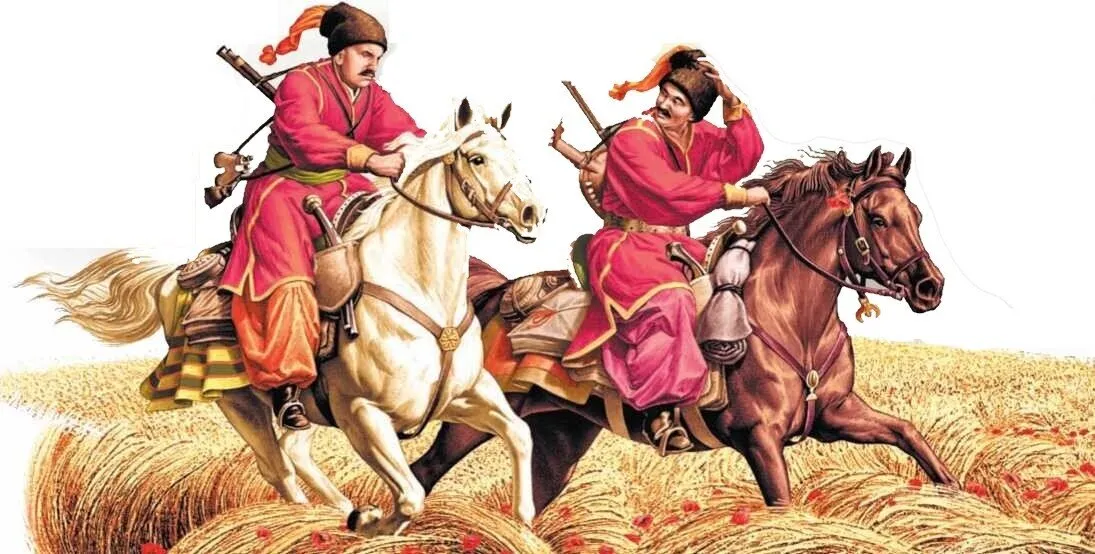
In the first half of the 17th century Cossack Ukraine waged a fierce struggle against the Turks, the Crimean Khanate and the Polish-Lithuanian Commonwealth. Foreigners’ interest in the phenomenon of Ukrainian resistance did not diminish. The most interesting accounts were left by the French fortification engineer Guillaume Le Vasseur de Beauplan, who served in Poland as a military engineer, lived in Ukraine for more than 17 years and built a number of fortifications, castles and towns.
In his work “A Description of Ukraine” (1660), Beauplan conveyed his observations on the life and customs of the Ukrainian people, the Zaporozhian Cossacks, the nobility, townspeople and others. By the early 19th century the work had been translated into English, German, Polish and Russian, which acquainted Western readers with the history, geography and culture of Ukraine and its heroic struggle against its enemies.
Beauplan described the Cossack system: the hetman is elected by the Cossacks by majority vote at the Council from among the most respected colonels and warriors; he has unlimited power and the unconditional obedience of the Cossacks, but without the consent of the Military Council the hetman does not begin important undertakings. According to Beauplan, hetmans had to be distinguished by intelligence, cunning and courage and to beware of failure, because “the Cossacks kill a cowardly leader as a traitor and put a new one in his place”. The field ataman for the time of military campaigns is elected in the same way, and the Cossacks ask for permission for a campaign not from the king but from the hetman.
Beauplan gave a rather contradictory description of Ukrainians, pointing both to treachery and cunning and to selflessness, deep religiosity and love of freedom. He described the Ukrainian Cossacks as brave, hardened warriors and bold seafarers, ready to set out on a campaign within a week of the first order, and accurate marksmen with pistols. In build the Cossacks are strong and tall, physically sturdy and resistant to natural conditions, and they like to dress up when they return as victors. They have a cunning and sharp mind, are generous and selfless, and do not strive for great wealth. Beauplan noted the Cossacks’ exceptional love of freedom: they “consider death better than slavery and often rise up against their oppressors, the Poles, to defend their independence”. Therefore rarely do 7 or 8 years pass without uprisings against oppression. In war they are tireless, valiant and brave, even reckless, and set little value on their lives; most die on the battlefield without living to old age.
According to Beauplan, in their leisure time Ukrainians are inclined to idleness and to drinking various beverages, but during campaigns (both by sea and by land) the Cossacks do not drink alcohol at all and do not even take it with them, and violators are thrown overboard on the ataman’s orders.
Beauplan wrote extensively about Ukrainian nature. The climate in Ukraine was marked by severe frosts and a very warm, dry summer, with little rain until October. Although Ukraine lies at the same latitude as Normandy, it is much colder here in winter. Beauplan described great frosts from which people froze parts of their bodies and even froze to death entirely. People saved themselves from freezing in winter by eating three times a day a special “soup of hot beer with butter, pepper and bread”. Among the vegetation in the Zaporizhzhia region, wild forests of cherry trees and wild grapes were widespread, the fruit of which was large and tasty, like that of cultivated ones. Low-growing almond trees with bitter fruit were also common.
The waters of Ukraine were rich in fish (carp, pike “of unusual size”, sturgeon, even herring and others) and large crayfish. Among birds on the banks of the Dnipro he mentions pelicans and cranes, and among hoofed animals, whole herds of deer, fallow deer, saigas and so-called sugaks. There were wild boars “of unusual size” and many wild horses, unsuitable for work but with extremely tasty meat (more delicate than veal). On the border with Muscovy there were many buffaloes and large cattle, as well as white hares and wild cats. On the border with Wallachia there were sheep with long wool. In the 17th century, according to Beauplan, a breed of horses striped like leopards (tarantovatykh) was widespread in Ukraine, and lords harnessed them to carriages when travelling.
Among minerals Beauplan mentions salt, which was brought from the Pokuttia region (from the borders of Transylvania), where it was boiled out of salt springs. Salt was also obtained from alder and oak ash, which testifies to a fairly complex process of obtaining salt by chemical means, already known in Ukraine. In Cossack Ukraine all the crafts needed for household life were widespread, along with the corresponding craftsmen: carpenters, wheelwrights, locksmiths, armourers, diggers, shoemakers, coopers, tailors and so on. Women spun flax and wool and wove linen and cloth for their own use. The Cossacks were skilled at extracting saltpetre and making gunpowder. All the Cossacks knew how to plough, sow, reap, mow, bake bread, prepare dishes, brew beer and mead, make vodka and so on. Beauplan described them as capable “of all the arts”. Trade, centred in Kyiv, remained widespread, with bread, furs, wax, honey, lard, salted fish and more being traded.
Oksana Tarapon,
Candidate of Historical Sciences, Associate Professor,
Leading Researcher of the Research Department
of Historical Local Studies of the Pereiaslav National Historical and Ethnographic Reserve
More articles