Information about Ukraine in Ancient, Byzantine and Arab Sources
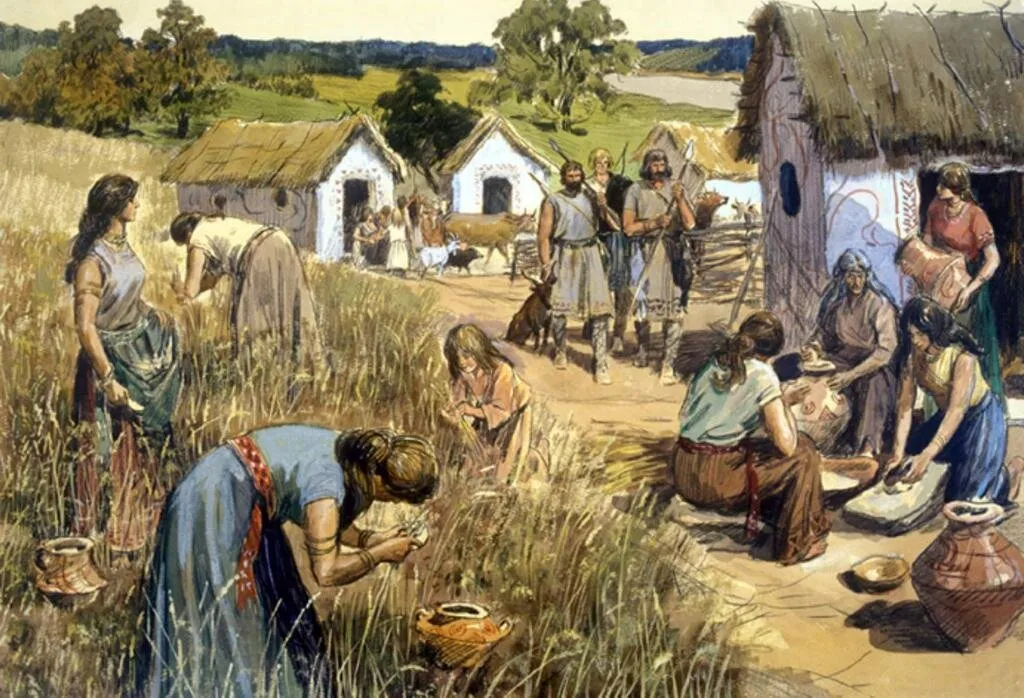
In the middle of the 1st millennium AD, the Slavs appear on the historical stage of Europe as an already formed, powerful socio-political force. It is well known that from the time of Kyivan Rus the Ukrainian lands were at the epicentre of European processes – political, economic and military. Descriptions of our territories and population were made by the ancient Greeks, Byzantines and Arabs.
In the 6th century, the Byzantine authors Jordanes, Procopius of Caesarea, Menander Protector, Theophylact Simocatta and Maurice the Strategist, knowing the Slavs under the names of Venedi, Antes and Sclaveni, described them in their works as a populous people that actively influenced political events in Southern and South-Eastern Europe.
Greek and Byzantine sources of the 6th–10th centuries reported on the struggle of the Byzantine emperors with the Kyiv princes of pre-Christian times. From these sources we learn about the military strength, grandeur, and political and economic expansion of ancient Ukraine-Rus.
In the second half of the 6th century the Byzantine writer Procopius wrote that the peoples of the Sclaveni (western Slavs) and Antes (eastern Slavs) are not ruled by one person, but since ancient times the community has governed: “all affairs, whether fortunate or unfortunate, go to the community.” They do not believe in fate but revere the forces of nature, to which they offer sacrifices.
The Byzantine writer and emperor Maurice (6th century) characterised the Sclaveni and Antes as similar peoples, with the same way of life and inclinations. They are free and “do not let themselves be persuaded into the yoke of foreign rule”; they are numerous and hardy in natural conditions. Despite their severity, they are a hospitable people, open and friendly to newcomers; they regarded wrong or negligence towards a guest as their own wrong, even to the point of vengeance. They do not hold captives indefinitely, as is common among other peoples, but after a set term of captivity give them a choice – to return to their own for a ransom or to remain with the status of free people. Women were distinguished by excessive virtue, and many of them regarded their husband’s death as their own, so they resorted to suicide, not considering their widowhood to be life. Despite this, Maurice characterised the Slavs as treacherous and unreliable in agreements, yielding more to force than to gifts. And when divided, they rarely reach agreement, do not hold to a common decision, each having his own opinion and unwilling to yield to another. Therefore they have many princes, who live in discord.
Patriarch Photius (end of the 9th century), a witness of the siege of Constantinople by our ancestors, wrote of them as a “wild and stern” people who know no fear. For the Byzantine Empire, then developed and the heir to the grandeur of ancient culture, the other world seemed barbarian (barbarian – a name given by the ancient Greeks and Romans to peoples and tribes that did not belong to Greco-Roman civilisation and stood at a lower level of cultural development). The encirclement of the mighty capital by hostile ships caused panic: “When fear and darkness seized the mind, and the ear listened to only one piece of news: the barbarians have climbed over the wall, and the enemies have taken the city! And what a city! – The city (Constantinople), adorned with the spoils of many peoples… You, who won many trophies over the enemies of Europe, Asia and Libya, how has a barbarian, simple hand now raised a spear over you, to set up a trophy over you!”
Leo the Deacon from Asia Minor (which had ties with Ukraine) around 990 characterised our ancestors as a reckless, strong, warlike people who, even when defeated, do not surrender into the hands of enemies, killing themselves with the sword.
Arab merchants and writers in the 10th century left much information about the Slavs, whose main city they considered to be Kyiv, which they called “Kuyaba”. They described the population as stern and warlike people engaged in farming and partly in cattle raising. They noted the large number of towns and the simplicity of life, as well as the presence of Christians among the pagans, who worshipped the sun. Arab sources pointed to the existence of many tribes among the Slavs. Writers of the 10th century told of successful military campaigns of Rus against neighbouring peoples, the result of which was the annexation of new territories.
The Arab scholar and geographer of the 10th century Ibn Rusta (Ibn Dasta) in his encyclopaedia “The Book of Precious Treasures” described our land and the customs of our ancestors. He noted the presence of beekeeping, the widespread grazing of pigs and sheep, and the growing of millet: “They sow millet most of all; at harvest they take sifted millet grains in a measure, lift them to the sky and say: God, you gave us food, give us enough of it now! They have various kobzas, gusli and pipes; the pipes are two cubits long, and the kobza has eight strings. They make a drink from honey.” At the birth of a son, a sword was laid before him with the words: “I leave you no property as an inheritance; you will have only what you win with this sword.” They had a developed funeral rite: after burning the deceased, on the second day they gathered the ashes in a vessel and placed it on a hill, and a year later the family held a memorial meal on that hill. As a sign of mourning, women tore their hands and faces with a knife.
Besides bravery and military skill, foreigners also noted disunity, cunning and treachery among the Slavic peoples, which significantly weakened their military potential. The Arab writer of the 10th century Ibn Yaqub in his “Notes” described our ancestors thus: “In general the Slavs are bold people, capable of campaigning, and were it not for the division among their numerous and scattered tribes, no nation in the world could fight their forces. They inhabit lands richest in settlements and means of life. They attend to farming and in earning their livelihood surpass all peoples of the north. Goods go from them by sea and by land to Rus and Constantinople.”
Thus in the first centuries of our era the Slavs formed a numerous, often disunited people with developed agriculture and a high level of military art.
Oksana Tarapon,
Candidate of Historical Sciences, Associate Professor,
Leading Researcher at the Research Department
of Historical Local Studies, Pereiaslav National Historical and Ethnographic Reserve


More articles