USING THE MOTANKA DOLL AS A PROTECTIVE CHARM
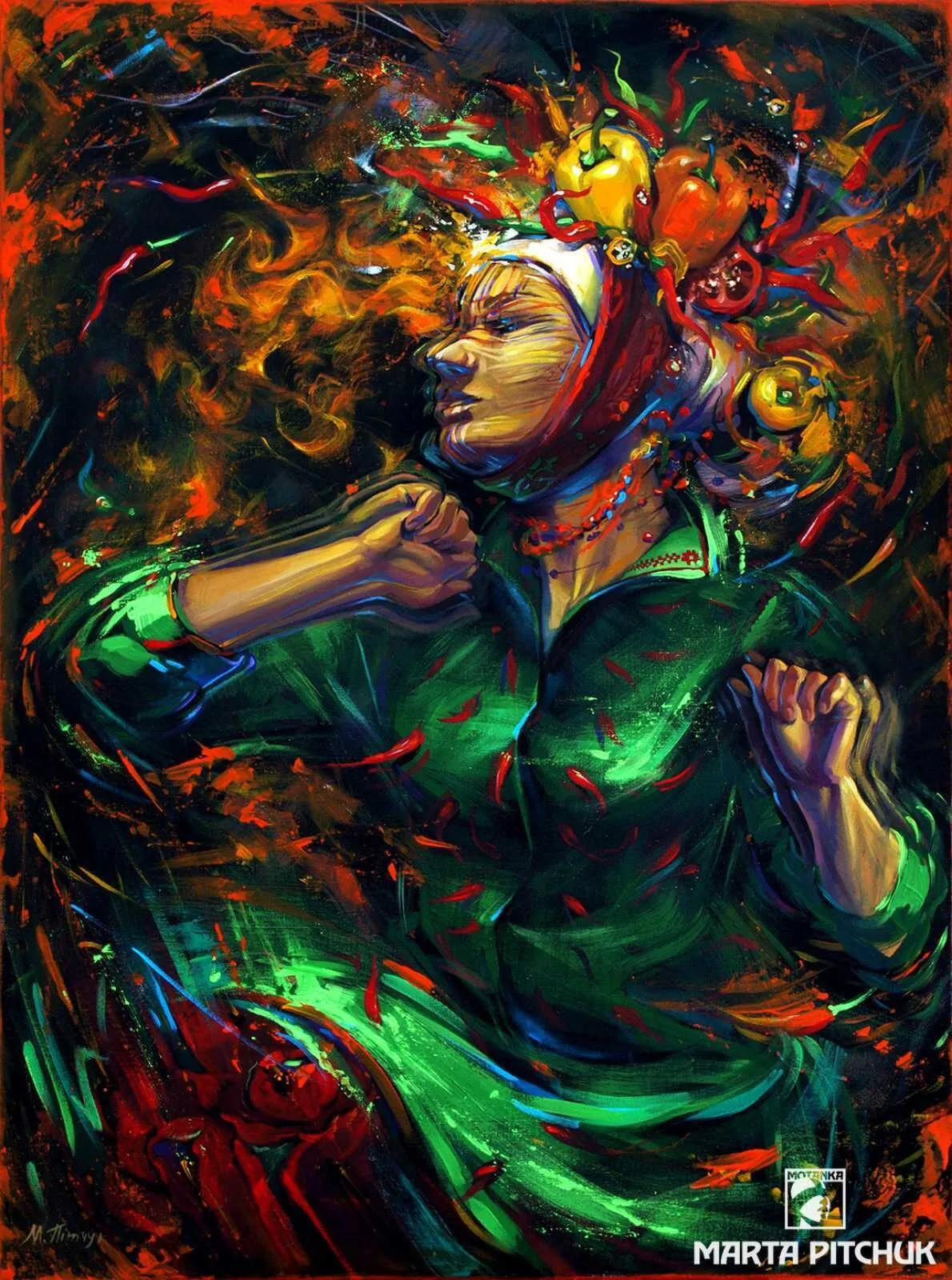
The motanka doll is one of the oldest symbols of Ukrainian culture. Alongside the embroidered towel, it served an important function as a protective charm.
It is a small work of art, a blend of past and present, a link with ancestors, an intermediary between the older and younger generations.
The name “motanka doll” comes from the fact that the technique of making it consists not in sewing but in winding threads and ribbons. The skill of making a doll was treated very seriously and responsibly and was taught from early childhood.
Quite often people made dolls to avert misfortune or illness from a person or a family. For this reason it was customary to make them faceless, so that they would truly protect. Giving them human facial features was strictly forbidden, since they must not resemble anyone, so as not to cause harm.
The motanka doll fulfils many symbolic roles. It is believed that the doll acts as an intermediary between living people and those who are no longer in this world, and vice versa, who have not yet appeared. Special attention was paid to wedding motanka dolls. They were dressed in accordance with all wedding traditions and always came in pairs, and they served not only as a protective charm for the young family but were also regarded as a symbol of the continuation of the family line.
According to numerous beliefs, when a person fell ill, they were given a specially made motanka doll. After the illness passed, it was burned, in the belief that it had taken all the negative energy upon itself. Quite often, separate dolls were also made for numerous rituals, into which were woven all the objects or things that a person wished to get rid of. Such dolls were then drowned in water or burned on a bonfire.
Every motanka doll must be dressed in an embroidered shirt, a skirt and an apron. All the elements are chosen in accordance with regional and geographical features, and each item of clothing also acts as a protective charm. For example, the skirt is a symbol of the earth, and the shirt denotes the three times of life: past, present and future. Colourful beads or embroidered shirts, which personified well-being and prosperity, were also considered obligatory. And of course, an indispensable element of the clothing was the headdress. It could be a cap, a kerchief or something else, but a headdress had to be present on the doll, because it symbolises the link with the sky.
The belief that a doll is a vessel for the souls of dead ancestors gave rise to certain traditions of making them among various peoples.
Since ancient times in Ukrainian families a young mother, expecting a child, made a motanka doll that embodied the future child. Before the newborn was placed in the cradle, this little doll was put there, and it became the child’s protective charm, its guardian, a symbol of the link with the whole clan, which protected the person wherever they might be.
In Ukraine, as late as the beginning of the 20th century, girls preparing a chest with their wedding dowry put their dolls into it together with towels and shirts. Every girl made a wound doll and took it with her into her new family. Moreover, in her husband’s family the young wife was allowed to play with the doll until the newlyweds had children, and it was believed that the more she played with the doll, the sooner she would become a mother and the healthier the children would be. And when a child was born, the young mother placed her dolls in the baby’s cradle to protect the child from illnesses and the evil eye, and when the child grew up, the dolls were given to it to play with.
A needle was never used in making a motanka doll, only thread and fabric. Only in recent times have craftspeople who make collectible dolls, which now have not only sacred and ritual but also artistic and aesthetic significance, used a needle for decoration, and then only for the doll’s costume, with embroidery or gold-thread work. All the other, most important details of the protective doll are still made without a needle.
At the core of the Ukrainian motanka doll is a cross-shaped figure in which the only three-dimensional part is the head. Making it is the most important moment in the process of creating the doll. The craftsperson (more often a woman) winds a spiral, a symbol of the infinity of Being and eternity (once again we meet the spiral as the basis for the face of a wound doll!), and, covering it with a piece of cloth, puts into it her thoughts and intentions: what the doll is being made for, what it is meant to promote and how it is to help its future owner. Then the head is wound with a thread laid out in the shape of a cross. In this case the cross is also a protective charm, a symbol of the Sun, of life and of new beginnings, and it symbolises the person themselves, the harmony of their personal physical world (the horizontal) and spiritual world (the vertical). And a knotted doll is always wound in the direction of the sun’s movement, so that it will bring luck and happiness.
The motanka doll has long been a protective charm in the Ukrainian family. Every mother made a doll for her child to play with.
Senior Researcher of the Pereiaslav National Historical and Ethnographic Reserve
Nataliia Reveha


More articles